
Call Center Optimization: A 2026 Framework for Enterprise Performance
If you’re responsible for telecom or voice, you’ve probably been told to “optimize the call center” while you’re still fighting for clean audio, predictable routing, and consistent carrier behavior. It’s hard to move customer satisfaction scores or impact agent productivity when you can’t even control whether calls connect cleanly in the first place.
Most call center optimization advice jumps straight to agent training programs, scripts, or CCaaS features. It treats the voice layer as a black box that “just works.” You know that’s not reality, especially when you’re running global traffic across multiple carriers, countries, and platforms.
Call center optimization is the ongoing process of improving how efficiently and reliably your contact center handles customer interactions to achieve better business outcomes, with voice infrastructure as a critical lever. Every customer experience (CX) metric you care about—CSAT, FCR, AHT, NPS, revenue per call—rests on one assumption: the call connects with clear audio, predictable routing, and minimal friction.
This article focuses on the parts you can actually influence as a telecom or voice leader: the voice infrastructure, routing logic, and diagnostics that make real optimization possible at scale.
Key Takeaways
If you only skim one section, make it this one. Here’s how to rethink optimizing call center functions from the voice layer up:
- Voice reliability and quality are the foundation of call center optimization. You can’t improve CSAT or FCR if calls drop, audio cuts out, or routing behaves inconsistently across regions.
- Infrastructure-level metrics tell you more than agent dashboards. Latency, jitter, packet loss, answer rates, and call completion are direct signals of voice-layer health and its impact on CX.
- Routing optimization must include carrier paths and failover logic, not just skills and queues. The way calls enter your network and traverse carriers is as important as how your ACD distributes them.
- Voice consolidation is an optimization accelerator, not just a cost play. Fewer carriers and a single telemetry layer mean faster detection, diagnosis, and validation for every improvement you make.
What is Call Center Optimization?
Call center optimization is the systematic improvement of the people, processes, technology, and especially the voice infrastructure that support inbound and outbound interactions, with the goal of increasing service quality, reducing effort, and improving business results.
When you strip away the buzzwords, it's about making every interaction more effective and efficient—without sacrificing customer experience. For a telecom or voice lead, that means:
- Ensuring calls connect reliably and quickly
- Routing traffic over the best possible paths with intelligent failover
- Consolidating and standardizing your global voice footprint
- Instrumenting your voice layer with the diagnostics needed to drive continuous improvement
You still need strong agents, smart workflows, and good digital channels, but those layers sit on top of your voice foundation. If that foundation is unstable, every “optimization” above it has diminishing returns.
Why Voice is Foundational to Call Center Optimization
If you own telecom or voice, you’re closer to call center performance than most people realize. Voice is often treated as plumbing, yet it’s the medium through which your most complex, high-stakes customer conversations happen. When you optimize the voice layer—quality, routing, and reliability—you directly influence:
- How quickly customers reach the right resource
- How much effort agents spend asking customers to repeat themselves
- How often calls need follow-up due to misunderstandings or drops
- How confident leaders feel about expanding into new markets or time zones
Get those right, and downstream KPIs like CSAT, FCR, and AHT become far easier to move.
Voice is the Highest-Impact Customer Service Channel
No matter how digital your customer journey becomes, the most urgent, complex, or emotionally charged issues still escalate to a phone call. When something’s broken, billing is wrong, or revenue is on the line, customers pick up the phone. That makes voice the “final impression” channel, even in an omnichannel experience. Remember:
- Customers often start in self-service, chat, or email, but they remember how the call felt and whether it solved the problem.
- Executives judge CX quality based on the calls they personally experience, not the chat logs they never see.
- High-value deals, renewals, and escalations often depend on a single clear, uninterrupted conversation.
In that context, small defects at the voice layer, like half-second delays, clipped audio, and echo, aren’t technical nuisances. They’re complex issues that affect how easy it is for customers and agents to understand each other, how long calls take, and how likely it is that issues get resolved the first time.
The Hidden Cost of Poor Call Quality
Poor call quality doesn’t always show up as a dramatic outage. More often, it’s death by a thousand cuts:
- Micro-delays and jitter force people to repeat themselves, layer over each other, and apologize for “talking on top of you.” That stretches AHT and increases fatigue for both customers and agents.
- Intermittent audio or one-way audio turns a simple resolution into a multi-contact journey: “We lost the line, can we call you back?” or “I’ll send you an email instead.”
- Regional reachability issues mean some customers simply can’t get through, but those failures may sit buried in carrier logs or fragmented portals you rarely see.
If you handle a million calls a month and even 1% are affected by quality or connectivity issues, that’s 10,000 frustrated customers and a meaningful number of repeat contacts, escalations, and churn risks. That’s a contact center optimization opportunity you can’t ignore.
Core Voice Metrics That Directly Impact Call Center Performance
You likely already track AHT, abandon rate, service level, and CSAT. To truly drive call center optimization, you also need a clear view of the underlying voice metrics that shape those outcomes. It helps to view this as two layers:
- Technical metrics that describe the health of your voice infrastructure and network paths
- Business outcomes that translate technical behavior into CX and revenue impact
When you connect these two views, you get a more complete picture of what’s really driving performance and where to intervene.
Technical Metrics
At the infrastructure level, three metrics matter most for voice quality: latency, jitter, and packet loss. You don’t have to be a network engineer to use them effectively, but you do need consistent telemetry across your footprint.
- Latency: The time it takes for voice data to travel from one endpoint to the other. In conversation, excessive latency feels like an awkward pause—people talk over each other or assume the other party didn’t hear them. As round-trip delay grows, call experience degrades fast, especially on support calls with back-and-forth dialogue.
- Jitter: The variability in packet arrival times. Even if average latency is acceptable, high jitter means audio packets arrive unevenly, creating choppiness, robotic voices, or brief dropouts. Jitter is often the culprit when calls “sound bad” despite decent ping times.
- Packet loss: The percentage of voice packets that never arrive. Small amounts are usually masked by codecs, but as loss increases, you get missing words, garbled audio, and, in severe cases, call drops.
Typical warning signs:
- Latency consistently creeping higher in a specific region or carrier path
- Jitter spikes during your peak hours or on particular routes (e.g. US–APAC)
- Packet loss associated with certain carriers, locations, or network segments
From an optimization standpoint, the critical shift is moving from reactive troubleshooting (“open a ticket when agents complain”) to proactive and real-time monitoring:
- Track these metrics per region, carrier, and trunk to better anticipate call volume fluctuations and peak periods.
- Set alert thresholds so you know about degradation before customers do.
- Use historical data to inform routing decisions and failover priorities.
You can’t coach your way out of network-induced silence or distortion. You have to see it, route around it, and validate that the change worked.
Business Outcomes
Latency, jitter, and packet loss matter because they show up in business outcomes. Some of the most powerful optimization signals at the voice layer are:
- Answer rate: The percentage of placed calls that are actually answered. While often thought of as an outbound sales metric, answer rate is equally important for service and collections. Low answer rates can point to caller ID issues, poor local presence, or numbers being flagged as spam.
- Call completion rate: The percentage of initiated calls that complete successfully without technical failure. Drops, one-way audio, and failed connects all depress this metric and create costly re-contact and follow-up.
- Time to connect: How long it takes from dial to audio establishment. Long post-dial delays can drive higher abandon rates and create the perception that your contact center is “hard to reach,” even if you have plenty of agents available.
- Regional reachability: The consistency with which customers can reach you via local, toll-free, or mobile-accessible numbers in each market. Gaps here often map directly to lost revenue or regulatory exposure.
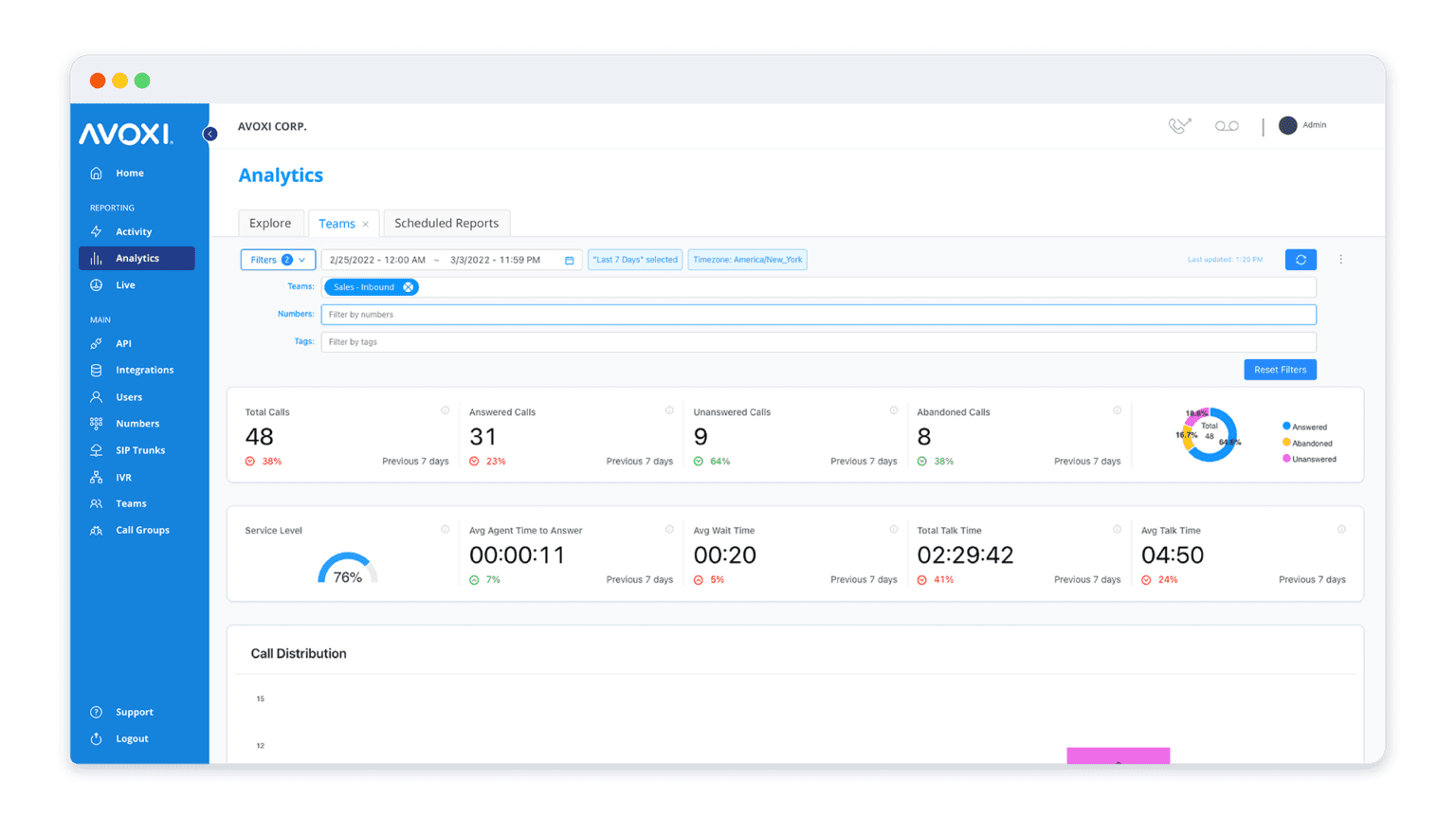
Infrastructure decisions directly influence these metrics:
- Local presence and number strategy affect whether calls are answered in the first place and whether your numbers stay compliant and trusted.
- Carrier and route selection affect call completion, time to connect, and perceived reliability.
- Ingress architecture (how and where calls enter your environment) affects both regional experience and resilience to outages.
When you align voice metrics with KPIs like CSAT, FCR, and AHT, you get something far more actionable than generic “quality issues.” You can pinpoint which routing paths, carriers, or regions are dragging performance down and prioritize improvements that move both technical and business needles.
How To Optimize Call Routing and Traffic Flow at the Voice Layer
Routing is usually framed as an IVR or ACD problem: right menu, right skills, right queue. Contact center operations and agent performance matter, but they rely on a clean and predictable voice layer.
In reality, your routing architecture starts before a call ever hits your CCaaS platform. Ingress points, carrier selection, regional breakout, and failover logic all shape what happens next. If you treat those as “set and forget,” you leave significant opportunities on the table to further optimize for customer expectations, first call resolution, call resolution rate, and more.
Voice-layer routing optimization focuses on:
- Choosing the best ingress paths for each region and number type
- Defining clear, tested failover behavior for carrier, region, and platform incidents
- Aligning traffic flow with both CX goals (speed, clarity) and operational constraints (cost, regulations, hours of operation)
Skills-Based and Time-Based Routing
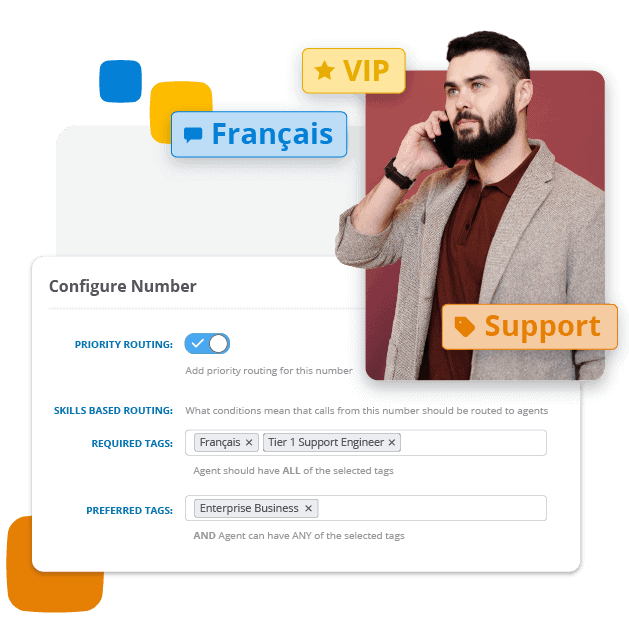
Skills-based and time-based routing live in your CCaaS or PBX, but they rely on predictable voice behavior to work well. From a voice perspective, you should:
Ensure Ingress Alignment with Skills
If you have specialized queues based on customer data (e.g., VIP, language, high-value accounts), make sure the numbers and carrier routes feeding those queues are reliable and appropriately geo-localized. Nothing undermines a premium line faster than intermittent audio.
Coordinate Time-Based Routing with Regional Carriers
When you route between sites or BPOs based on time-of-day or follow-the-sun models, your carrier paths and DID allocations need to support those patterns cleanly. Otherwise, you’ll see inconsistent behavior when shifts change or during holidays.
Design Overflow and Failover with Voice Reality in Mind
If your ACD sends overflow traffic to another region or partner, confirm that your voice paths to that destination have been tested under load and monitored for quality—not just functionally validated once.
In other words, skills-based and time-based routing can only optimize what reaches them. If calls arrive via unstable or suboptimal paths, your smartest queue logic is constrained from the start.
Geographic Traffic Optimization and Regional Failover
Global environments introduce challenges that traditional routing guidance often glosses over. You’re dealing with:
- Calls originating from different countries, networks, and device types
- Regional PSTN nuance, including local restrictions and number types
- Latency and quality trade-offs between centralized and regional breakouts
To optimize geographic traffic:
- Use regional ingress where it improves quality: For example, terminate APAC calls in-region and then use optimized IP paths back to your core if needed, instead of hairpinning everything through a single geography.
- Define clear regional failover rules: If a primary carrier in a country degrades or fails, which secondary path takes over? Is that behavior consistent, tested, and observable in your telemetry?
- Balance cost vs. experience intentionally: Cheaper long-haul routes may look good on a spreadsheet, but drive higher latency and lower CSAT. Build playbooks that make those trade-offs explicit rather than accidental.
Done well, geographic traffic optimization gives you resilience and performance: localized experiences for customers, predictable behavior for agents, and fewer surprises during regional incidents.
Voice-Layer Routing vs. Application-Layer Routing
A lot of confusion in call center optimization comes from conflating two very different things:
- CCaaS (application-layer) routing: IVRs, menus, queues, skills, priority rules, and agent selection.
- Voice-layer routing: How calls enter your environment (DIDs, toll-free, SIP trunks), which carriers and routes they use, how traffic is geographically distributed, and what happens when something breaks.
You need both—but they solve different problems. If you only optimize application-layer routing:
- You might reduce queue times without addressing the delay before the queue even starts.
- You might improve agent utilization while call completion issues quietly erode CX.
- You might refine your IVR while some customers can’t reach it at all due to regional reachability gaps.
When you treat voice routing as an optimization discipline in its own right, you can:
- Standardize how calls flow from carriers into each CCaaS tenant or site
- Implement consistent, testable failover behavior across regions and platforms
- Instrument your routing choices with measurable quality and completion data
The best results come when telecom and CX teams work from a shared model: application-layer routing handles “who should take this call?” while voice-layer routing ensures “this call arrives cleanly, reliably, and in the right place.”
Reduce Operational Friction Through Voice Consolidation
You’re likely dealing with a patchwork of local carriers, historical providers, CCaaS-native voice, and legacy trunks. That sprawl might feel “safer” because you’re not putting all your eggs in one basket, but it usually has the opposite effect when it comes to optimization. Fragmented carrier environments create friction at every stage:
- Different portals, data models, and SLAs make it hard to see what’s really happening end-to-end.
- Outages or degradations require multi-party troubleshooting, slowing down resolution of customer issues.
- Routing behavior and feature sets vary by provider, making global changes complex and error-prone.
Cost reduction is a valid reason to consolidate, but it’s not the most strategic one. The real value is how much faster and more confidently you can optimize once your voice layer is simplified and observable.
Call Center Optimization Framework: Speed is the Real Benefit
Think of optimization as a recurring loop:
Detect → Diagnose → Adjust → Validate
In a fragmented environment, every step of this framework takes longer.
- Detect: With inconsistent monitoring and reporting across carriers, you may not notice regional quality or completion issues until agents or customers complain—and even then, it’s hard to determine scope.
- Diagnose: Root-cause analysis means logging into multiple portals, reconciling different logs, and coordinating with several NOCs. You lose hours or days just figuring out where the problem lives.
- Adjust: Rolling out a routing change across providers means different configuration models, different capabilities, and more places to introduce mistakes.
- Validate: Proving that a fix worked is harder when data is siloed; you may only see partial improvements or lagging anecdotal feedback.
By consolidating your global voice footprint with fewer, more capable providers, or a centralized voice platform that sits in front of your CCaaS, you compress that loop:
- Single-pane visibility accelerates detection.
- End-to-end telemetry shortens diagnosis and MTTR.
- Centralized routing policies make adjustments faster and less risky.
- Standardized metrics make it easier to validate improvements and iterate.
That speed compounds. You’re able to streamline forecasting and operational efficiency. And every subsequent optimization strategy becomes cheaper and safer to attempt, which is exactly what you need in a dynamic, multi-region environment.
Centralized Voice Management
Consolidation doesn’t just mean “fewer carriers.” It means having a coherent way to manage your entire voice footprint. A centralized voice management layer typically provides:
- A single telemetry and analytics layer: Standardized metrics for latency, jitter, packet loss, call completion, and answer rates across all regions and carriers
- Consistent routing behavior: A common policy engine for how calls are routed, prioritized, and failed over, regardless of underlying providers or CCaaS platforms
- Unified number management: A central place to provision, configure, and retire numbers globally, with clear mappings to queues, skills, and regions
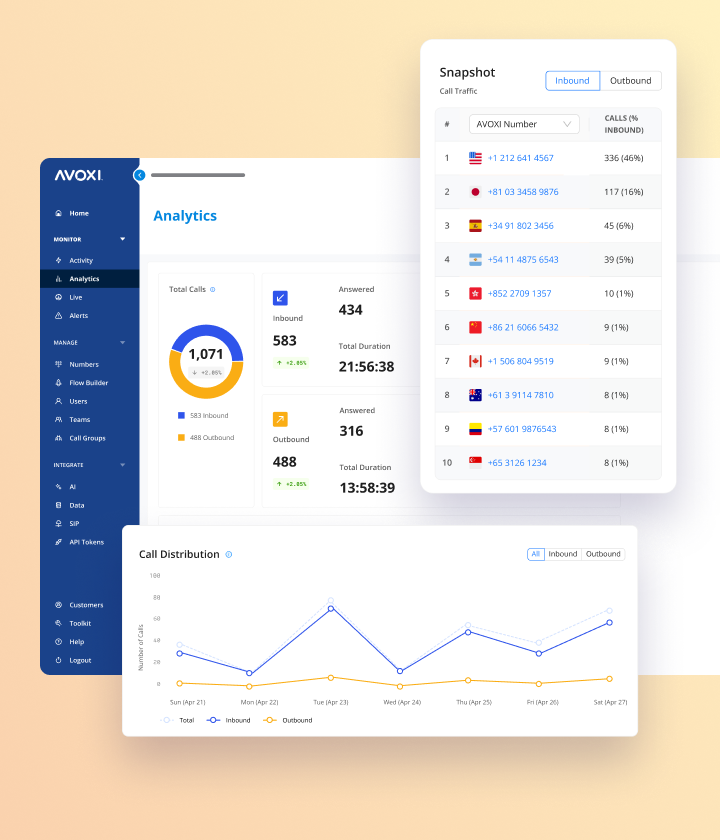
For you, that means fewer blind spots and less operational drag.
For your CX and operations counterparts, it means faster iteration and more predictable results when they ask, “Can we route this segment differently?” or “Can we set up a new region by next quarter?”
Build a Future-Ready Voice Layer for Continuous Optimization
Most “future-ready” conversations jump straight to AI-powered solutions, chatbots, and automation. Those are important, but they all depend on one prerequisite: clean, well-instrumented voice data flowing consistently through your stack.
A future-ready voice layer isn’t just about choosing the latest and greatest technology. It’s about making sure your infrastructure can meet customer needs and support continuous optimization over time:
- Stable, high-quality audio so AI and analytics engines can accurately transcribe and analyze calls
- Clear integration boundaries between CCaaS, CRM, and voice platforms so ownership and accountability are obvious
- Diagnostic tools that turn voice metrics into actionable insights—not just dashboards you glance at during outages
When you build with that in mind, your investments in AI, workforce optimization, and customer journey orchestration have a much higher chance of delivering real value.
CCaaS Integrations and Voice Ownership
As you modernize your stack, one question becomes critical: Who really owns voice?
CCaaS platforms often offer native voice, and that can work well for straightforward environments. But as soon as you introduce multiple CCaaS instances or vendors, hybrid environments with legacy systems, or complex global routing and regulatory needs, you benefit from treating voice as its own layer, with a platform designed to integrate natively into your CCaaS rather than being tightly bound to a single application. In a future-ready model:
- Your CCaaS focuses on call center agent experience, workflows, and reporting.
- Your voice platform focuses on global number strategy, routing, quality, and diagnostics.
- Integrations between the two are direct, standards-based (e.g., SIP, APIs, webhooks), and well-documented.
That separation of concerns makes it easier to:
- Change or add CCaaS platforms without re-architecting your entire voice layer
- Apply consistent routing and quality standards across different business units or regions
- Roll out customer-centric global changes (e.g., new compliance rules, routing policies) from a single control point
You retain true ownership of your voice strategy while still giving CX teams the tools they need to innovate at the application layer.
Voice Diagnostics, Analytics, and Optimization Feedback Loops
Diagnostics are often treated as an emergency tool: something you turn to when calls fail or quality tanks. For continuous call center optimization, diagnostics need to be part of an always-on feedback loop. A mature approach typically includes these valuable insights:
- End-to-end call traces that show signaling, routing hops, and quality metrics across the full path of a call.
- Correlated views that tie technical events (e.g., packet loss spikes) to business impacts (e.g., drop in CSAT or increase in repeat calls).
- Trend analysis across regions, carriers, and number types to identify where proactive improvements will have the most impact.
With that foundation, your optimization loop looks more like this:
- Measure key voice and business metrics continuously.
- Identify where quality, reachability, or routing patterns are eroding performance.
- Change routing, carriers, or configurations in a controlled way.
- Validate whether those changes actually improved your KPIs.
- Repeat on an ongoing basis, not just during incident reviews.
The right voice platform makes this practical by exposing the necessary data in a consumable way and integrating with your existing observability and analytics tools. All you need is clear visibility, sensible metrics, and the ability to act on what you see.
Call Center Optimization Starts with Voice
You’re under pressure to improve call center KPIs, adopt new CX tools, and support global growth—all at once. Before you add another layer of technology, it’s worth asking a simpler question: Can your customers consistently get through and have a clear, uninterrupted conversation?
You can’t optimize what you can’t reliably hear, route, or diagnose. Voice infrastructure is the foundation that makes every other investment, from AI to workforce management, actually work. As a next step, consider a structured audit of your current voice layer:
- Map your carriers, numbers, and CCaaS instances.
- Baseline your key voice metrics (latency, jitter, packet loss, call completion, answer rates) by region.
- Document your routing and failover logic and identify where behavior is undefined or untested.
- Assess how quickly you can currently detect, diagnose, adjust, and validate changes.
If you’re ready to turn that audit into a roadmap, a cloud-based voice and contact center platform like AVOXI can help you centralize global numbers, standardize routing behavior, monitor quality, and integrate cleanly with your existing CCaaS stack. Schedule a free demo to explore how that might look for your environment.
Call Center Optimization FAQ