
Top Toll-Free Number Service Providers: Global Enterprise Guide
Toll-free numbers remain a cornerstone of enterprise communication. They give customers an easy, cost-free way to reach your business in key markets. For global organizations, offering a toll-free option builds credibility, improves accessibility, and helps maintain consistent service across markets.
However, sourcing and managing toll-free numbers at scale is far from simple. Enterprises expanding across regions often face limited coverage, inconsistent call quality, and the complexity of managing multiple local carriers. Ensuring reliability and compliance across dozens of countries only adds to the challenge.
That’s why choosing the right toll-free number service provider is essential. The ideal partner ensures regulatory compliance and provides consistent global connectivity, keeping your business easy to reach in every market it serves.
Top toll-free number providers
1. AVOXI
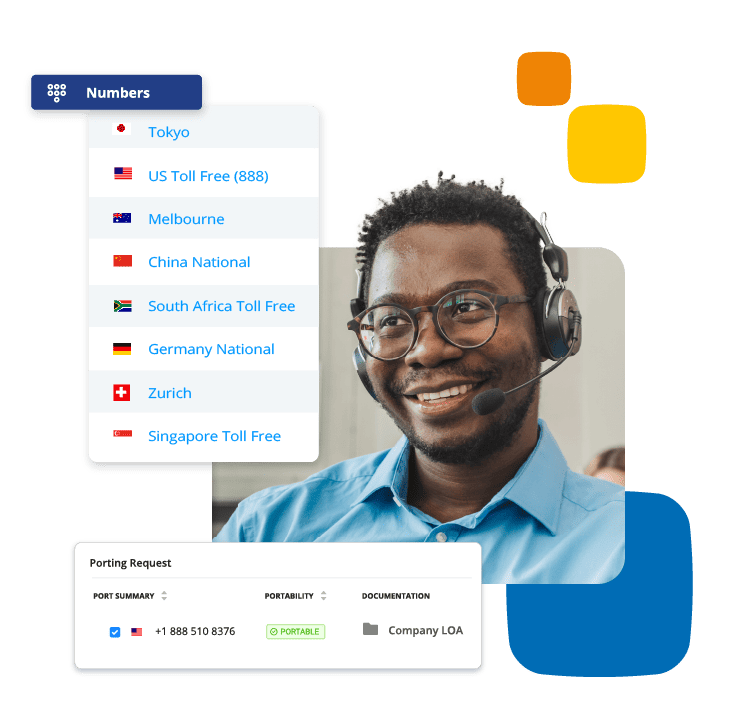
AVOXI offers toll-free numbers in more than 150 countries, enabling enterprises to connect with customers worldwide.
AVOXI handles the entire porting process, working directly with carriers to quickly transfer your existing business phone number. It stands out for its smooth, managed experience.
With TrueLocal™ dialing, agents abroad can display local phone numbers when making outbound calls instead of international ones. This significantly improves answer rates and builds trust.
The platform runs on redundant cloud infrastructure with SLA-backed uptime and real-time call monitoring.
From one dashboard, teams can view, route, and manage all landline, mobile phone, and cell phone connections without juggling multiple providers or tools.
One G2 reviewer highlighted its reliability: “We have been using Avoxi for more than 7 years now. It has been one of our best decisions to move to Avoxi. Earlier, we used to face [a] lot of connectivity and call drop issues, but since we moved to avoxi, everything became very smooth and helped our team to provide better customer service.”
2. AT&T
AT&T is a long-established telecom provider known for reliable toll-free service across the U.S. It’s a strong choice for enterprises operating primarily in North America that need dependable call quality with solid customer support.
Its global offering, however, is more limited. Setting up international telephone numbers can take longer, and coverage across certain markets remains narrow.
If your focus is the U.S. and you want a provider with legacy strength, AT&T delivers.
3. Twilio
Twilio is best known for its developer-first approach to communications. It offers APIs that let businesses build custom workflows, connect toll-free numbers to apps, and automate customer interactions.
Developers can integrate voice, SMS, and other communication tools directly into their systems and customize them to fit business needs. This flexibility makes Twilio ideal for teams with strong technical resources.
However, managing toll-free numbers through Twilio often requires ongoing maintenance. Call quality can vary across regions, and global coverage depends on third-party carrier relationships.
For enterprises without dedicated technical teams, setting up and scaling Twilio may be more complex compared to managed platforms.
4. Bandwidth
Bandwidth is a U.S.-based telecom provider known for its strong domestic network and direct-to-carrier infrastructure.
It powers voice solutions for many large brands and offers reliable toll-free service across North America. Call quality is consistent, and integration options are available for voice-enabled applications.
While powerful domestically, Bandwidth’s platform leans toward voice infrastructure rather than a full enterprise management layer. Because it’s specifically designed for developers, advanced routing, analytics, and international expansion often require additional integration work.
5. Vonage
Vonage includes toll-free numbers as part of its broader communications platform, combining voice, video, and business texting. The platform serves organizations that want to manage all channels in one place.
Setup is simple, and the platform integrates easily with CRM and helpdesk tools, making it convenient for customer-facing teams. Call quality within supported regions is strong, and businesses can manage toll-free numbers directly through the Vonage dashboard.
While the bundled approach works well for simplicity, it can limit customization. This architecture ties toll-free features to the broader communication system, leaving businesses with less control over routing and carrier settings.
Vonage is a good fit for small businesses that value simplicity and want one tool for all communication channels.
How to evaluate toll-free providers for enterprise needs
Choosing a toll-free provider goes beyond pricing and basic coverage. For enterprises, the right partner simplifies business communications, ensures reliable connectivity, and delivers support that keeps operations running smoothly.
Here are the key areas to evaluate before you decide:
Uptime
Customers notice when phone calls are smooth and uninterrupted. They naturally build trust with companies that deliver a seamless experience.
Strong uptime ensures your 800 numbers are always available. When lines stay open, callers can reach support, ask questions, or get help without delay. High service quality also keeps conversations clear and professional, which reflects positively on your brand.
Before choosing a provider, review their uptime guarantees, call routing efficiency, and overall stability of their business phone system.
Coverage breadth and depth
Look for providers with broad and deep coverage. Global reach means your business can activate toll-free numbers in every market where you operate, while depth ensures reliable local access within each region.
A provider with its direct carrier relationships will deliver faster activations, better routing, and consistent call quality across countries.
Call quality
A strong provider offers SLA-backed uptime, redundant infrastructure, and tools that enable real-time performance monitoring. A reliable partner also uses direct-to-carrier routing, which ensures cleaner audio, faster connection times, and consistent performance across geographies.
Porting and support expertise
Switching providers can be complex, especially for enterprises managing hundreds of numbers.
Choose a partner with managed porting and a dedicated support team that handles carrier coordination for you. Expert assistance shortens migration timelines and reduces disruptions to your customer service lines.
Why enterprises need toll-free number providers
Toll-free numbers make it easy for customers to connect with your brand without worrying about international costs or complex dialing codes. Beyond convenience, they’re a key part of building global consistency and maintaining regulatory compliance in all regions you serve.
Here’s why they’re essential for global operations:
Enhancing customer accessibility
Whether it’s a service inquiry in Germany or a sales call from Singapore, a toll-free line ensures your business is always within reach.
For enterprises managing multiple regions, a centralized toll-free system simplifies routing and support. Calls can be automatically directed to the right teams, improving speed and response times. This results in a better customer experience and fewer missed opportunities.
Building global brand recognition
For multi-national enterprises, every customer interaction reflects the brand. Toll-free numbers give companies a consistent identity across borders while adapting to local expectations.
Customers in each country can reach your business through local number formats. This localized accessibility helps brands operate as truly global entities while maintaining a local feel.
Regulatory considerations
Telecom regulations vary widely by country, and non-compliance can lead to service interruptions or costly penalties. A qualified toll-free provider helps enterprises navigate these differences, ensuring numbers are properly registered, verified, and compliant with local laws.
Providers experienced in global voice management handle the complex details—from Know Your Customer (KYC) documentation to local number allocation rules—so enterprises can expand confidently without operational risk.
Data-driven voice insights
Every toll-free interaction generates valuable data. Enterprises can track call volumes, regional activity, and response trends to understand how customers engage across markets.
When all toll-free data lives on a single platform, teams can view global performance in one dashboard—from call quality to traffic trends. Built-in analytics transform that data into clear insights that help forecast demand, optimize staffing, and identify new growth regions.
Challenges in sourcing toll-free numbers globally
Enterprises understand the value of global toll-free numbers, but expanding voice coverage across regions remains one of the most complex parts of global operations.
It’s especially challenging when companies use multiple carriers for different regions. They face inconsistent coverage, delays, pricing issues, and compliance risks that can disrupt inbound calls.
Here are the primary obstacles global teams face:
Fragmented regional providers
Many enterprises rely on separate local carriers to manage their phone service in different markets. This approach creates uneven service quality, billing complexity, and limited visibility into network performance.
Without a unified platform, tracking caller IDs, call volume, uptime, or routing changes across dozens of vendors quickly becomes unmanageable. Even basic capabilities like call forwarding, voicemail, and text messaging may vary by provider, creating gaps in functionality and making it harder to deliver consistent business calls globally.
Delays in number provisioning
Provisioning new toll-free phone numbers can take days or even weeks when managed through regional carriers. Each market has its own process, paperwork, and area code approval timelines that can slow expansion and the launch of marketing campaigns.
Enterprises operating at scale need a user-friendly provider that automates provisioning, keeps a ready inventory of active numbers, and integrates with Voice over Internet Protocol (VoIP) and mobile apps to route calls efficiently across regions.
Managing compliance across countries
Telecom regulations vary by country, and requirements for documentation, registration, and local presence are constantly evolving.
Without centralized oversight, enterprises risk service interruptions or penalties that affect contact center operations and business calls with potential customers.
Choose the Best Toll-Free Provider for Global Success
Managing multiple regional vendors creates silos that slow down provisioning, complicate billing, and make performance monitoring nearly impossible. To solve these challenges, enterprises need a single global toll-free provider—one that unifies communication under one network while delivering local expertise.
AVOXI solves this complexity. With toll-free numbers in more than 150 countries, managed porting, and TrueLocal™ dialing, AVOXI helps enterprises stay connected across the globe.
Teams can track performance in real-time, adjust routing instantly, and maintain full visibility into call quality and compliance.
Ready to simplify your global voice network? Get global toll-free numbers with AVOXI today. Request a demo to see how simple global communication can be.
FAQ about toll-free number service providers