
Top Cloud PBX Providers for Global Enterprises
Modernizing Private Branch Exchange (PBX) systems has become urgent for global enterprises, as legacy platforms are reaching end of life. At the same time, cloud adoption across CX and IT continues to accelerate. Yet despite this shift, a recent Metrigy study shows that 41.5% of companies still rely on on-premises PBX platforms that they maintain themselves.
If you manage voice for a multinational organization, you likely feel this tension. Aging hardware struggles in regions with strict regulations or fast growth, and hybrid teams expect stable, compliant calling everywhere. The challenge grows when multiple carriers or PBX systems operate across countries, creating more outages and slowing cloud and AI initiatives.
This guide shows you how to evaluate cloud PBX providers that can support global operations, simplify your environment, and give you a voice foundation ready for the next stage of your CX strategy.
Key Takeaways
- Cloud PBX modernizes global voice by centralizing routing, scaling across regions, and supporting CCaaS and UCaaS platforms that drive enterprise CX.
- Legacy PBX and multi-vendor carrier environments create fragmentation that drives outages, complicates compliance, and delays AI and CCaaS modernization.
- Enterprise-grade cloud PBX platforms deliver the capabilities SMB tools cannot, including global number reach, SIP security, multi-region failover, and deep CCaaS/UCaaS integrations.
- Successful migrations depend on structured planning that includes global number audits, managed multi-country porting, targeted pilots, and early routing validation.
What is a cloud PBX and how does it benefit global enterprises?
A cloud PBX (also known as hosted PBX) manages inbound, outbound, and internal call routing through internet-hosted servers rather than on-site hardware. It also moves beyond earlier virtual PBX setups, which offered basic hosted calling but lacked the global routing and compliance support enterprises need today. This helps you support teams across countries with consistent performance while avoiding the limits of hardware that cannot keep pace with international operations.
You gain centralized SIP trunking, multi-region redundancy, and direct integrations with Contact Center as a Service (CCaaS) and Unified Communications as a Service (UCaaS) platforms such as Genesys, NICE, Five9, Microsoft Teams, and Zoom. These capabilities work together to improve your international presence and reduce the effort required to manage multiple regional carriers.
Cloud PBX vs Traditional PBX
When comparing cloud PBX to traditional on-premises PBX systems, the differences become clear as soon as your business needs to operate across borders. A hardware-based PBX depends on fixed, local equipment that struggles with multi-country regulations and routing demands. As a result, you spend more time maintaining infrastructure and coordinating with regional carriers instead of focusing on growth.
A cloud PBX offers a more flexible model by centralizing control and providing consistent performance across markets. You gain support for compliance, number management, and routing requirements that traditional PBX platforms cannot keep up with on a global scale.
Here is how the two approaches compare:
| Area | Cloud PBX | Traditional PBX |
|---|---|---|
| Global coverage | Works across many countries with unified management | Limited to each physical location |
| Compliance support | Adapts to multi-country rules for calling, numbering, and data | Requires separate setups and manual updates |
| Routing reliability | Multi-region routing with built-in failover | Local routing only, vulnerable to site outages |
| TrueLocal™ dialing | Supports local number presentation and caller familiarity | Requires local hardware and carriers in each region |
| SIP security | Centralized SIP control, monitoring, and protection | Varies by site and carrier, harder to standardize |
Benefits of Cloud PBX for Enterprise Organizations
Enterprises see clearer value once they look at the operational and strategic advantages a cloud PBX provides:
- Lower Total Cost of Ownership (TCO) compared to on-prem systems: Reduce hardware spending, maintenance work, and regional carrier contracts.
- Scalability across multiple countries: Expand into new markets without deploying physical PBX infrastructure.
- Reduced IT overhead: Shift upgrades, routing changes, and maintenance to the provider so your teams can focus on higher-value work.
- Cloud redundancy with multi-region failover: Maintain uptime by keeping calls available even if a region experiences an outage.
- Faster provisioning with managed porting: Move numbers into the cloud smoothly and activate new locations quickly.
- Improved reliability: Stabilize performance for distributed teams through centralized routing and continuous monitoring.
- Easier integrations with CCaaS and UCaaS platforms: Connect calling to your CX and collaboration systems for a unified experience.
9 Best Cloud PBX Providers Compared
As you evaluate cloud PBX options, you will notice many service providers focus on office-phone needs rather than the global scale, compliance readiness, and migration support that enterprises require.
To help you sort through the noise, this comparison highlights the top hosted PBX providers for enterprises.
| Provider | Global Coverage | IVR and Call Routing | Call Quality Monitoring | CCaaS / UCaaS Integrations |
|---|---|---|---|---|
| AVOXI | Strong international reach across 150+ countries | Advanced routing, global number management | Real-time quality analytics and SIP visibility | Genesys, NICE, Five9, Teams, Zoom |
| 8x8 | 50+ countries | Multi-level Interactive Voice Response (IVR) and skills-based routing | Quality management tools, MOS scoring | Teams, Salesforce, Genesys |
| Vonage Business Communications | 60+ countries | Flexible routing and call flows | Call quality dashboards | Vonage Contact Center, Teams, Salesforce |
| RingCentral | 45+ countries | Intelligent IVR, multi-site routing | QoS analytics and alerts | Teams, Zoom, Salesforce |
| Nextiva | Primarily North America, limited global depth | Basic IVR and routing | Call quality tracking | Teams and CRM tools |
| Dialpad | 50+ countries | AI-supported routing | Real-time call quality insights | Salesforce, Teams, Zendesk |
| Zoom Phone | 40+ countries | Auto attendants and call queues | Quality dashboard and device monitoring | Zoom UCaaS and CCaaS partners |
| Microsoft Teams | Global availability through Microsoft’s network | Auto attendants and call queues | Call analytics and QoS metrics | Microsoft 365, Dynamics, and Direct Routing partners |
| Cisco Webex Calling | Strong enterprise footprint globally | Flexible routing and multi-site controls | Real-time quality and network visibility | Webex Contact Center, Teams, CRM systems |
1. AVOXI
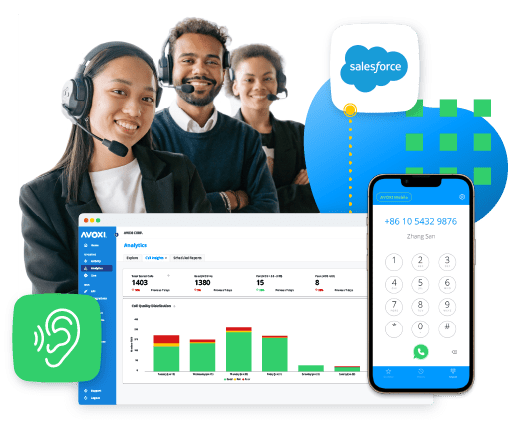
AVOXI provides cloud voice infrastructure built specifically for enterprises operating across multiple countries. The platform emphasizes global number coverage, diagnostic visibility, and integration flexibility for organizations consolidating voice providers or migrating contact centers to the cloud.
Key features:
- Virtual numbers and TrueLocal™ caller ID across 150+ countries, including hard-to-reach markets
- FlowBuilder for no-code IVR and intelligent routing configuration
- Real-time call quality monitoring with MOS scoring, jitter analysis, and packet loss tracking
- SIP trunking with TLS/SRTP encryption
- Managed porting service with dedicated specialists
- Direct integrations with Genesys, Amazon Connect, NICE inContact, Microsoft Teams, and Zoom
- 24/7 follow-the-sun customer support with SLA-based premium options
Benefits:
- Consolidates multiple regional carriers into a single global platform, reducing vendor management complexity
- Provides diagnostic tools that identify call quality issues before they impact customer experience
- Enables rapid international expansion through instant number provisioning in most markets
2. 8x8
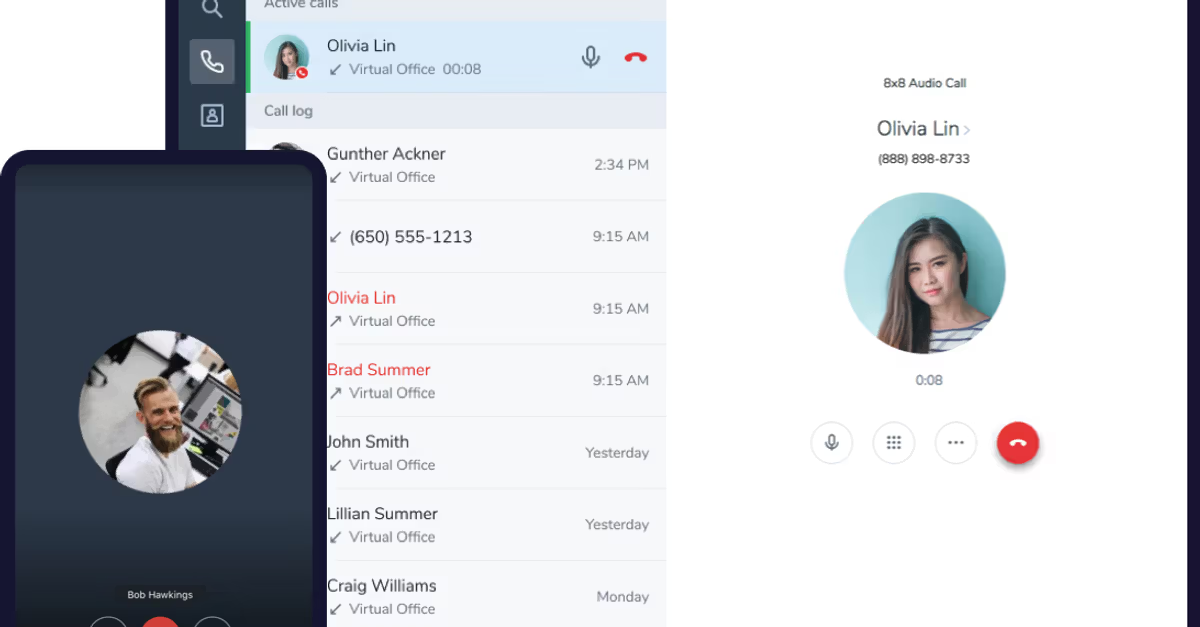
8x8 delivers an integrated communications suite combining voice, video, chat, and call center capabilities. The platform targets mid-size to large enterprises seeking unified communications with built-in analytics.
Key features:
- Unlimited calling plans with international minutes included
- Skills-based routing and queue management
- AI-powered speech analytics
- Video conferencing with screen sharing
- Native contact center functionality
Benefits:
- Combines multiple communication channels in a single platform, simplifying technology stack
- Includes contact center features without requiring a separate CCaaS purchase
- Provides analytics dashboards for performance tracking across communication channels
3. Vonage Business Communications (VBC)
Vonage offers cloud-based PBX with an emphasis on flexibility and an integration marketplace. The platform serves businesses requiring customizable communication workflows with third-party tool connections.
Key features:
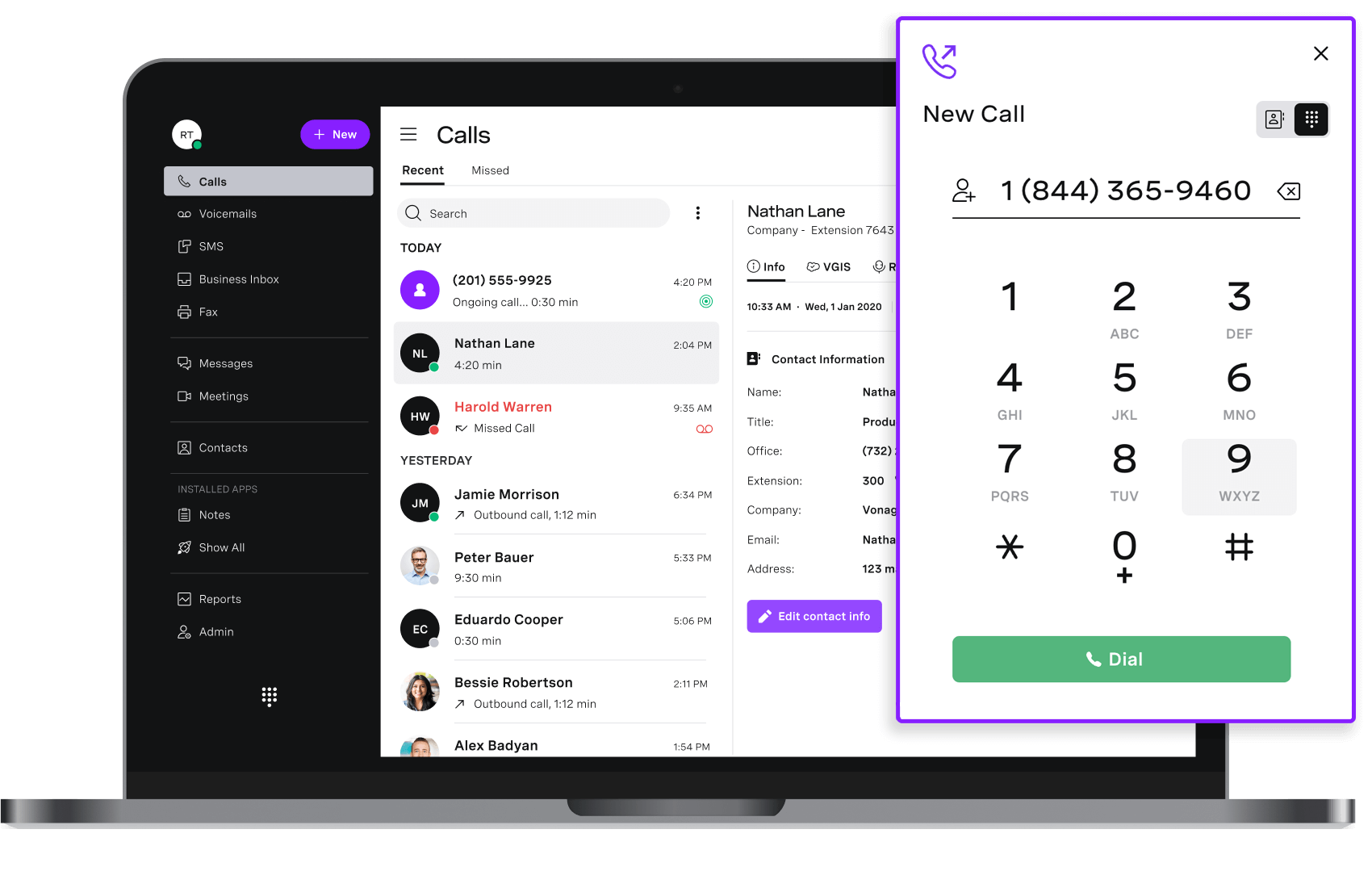
- Mobile and desktop softphone applications
- Visual voicemail with transcription
- Call recording and monitoring
- Integrations marketplace with pre-built connections
- API access for custom development
Benefits:
- Extensive integration options support connections with existing business tools
- Mobile-first approach empowers remote and distributed teams
- Flexible routing rules accommodate complex call distribution needs
4. RingCentral
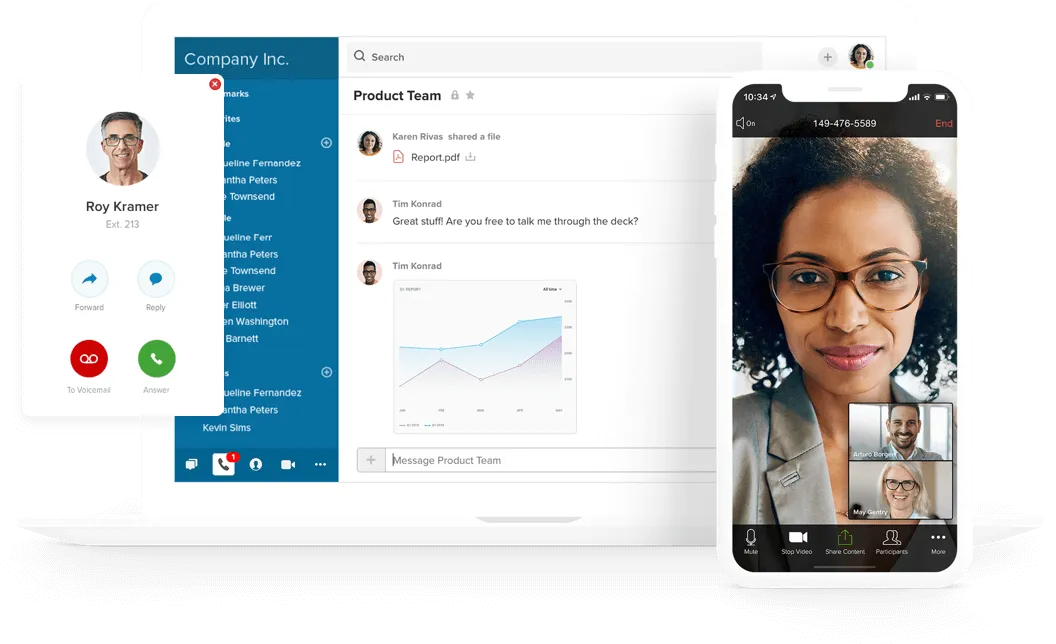
RingCentral provides a UCaaS platform with integrated cloud PBX solutions, video conferencing, and team messaging. The system emphasizes collaboration features alongside voice capabilities.
Key features:
- Multi-level IVR with unlimited call queues
- Hot desking for flexible workspace environments
- AI meeting notes and transcription
- Analytics with customizable reporting
- Single sign-on and advanced security controls
Benefits:
- Unified interface reduces training time for employees managing multiple communication channels
- Scalable architecture supports various organization sizes, from small teams to enterprise deployments
- Strong video conferencing functionality complements voice infrastructure
5. Nextiva
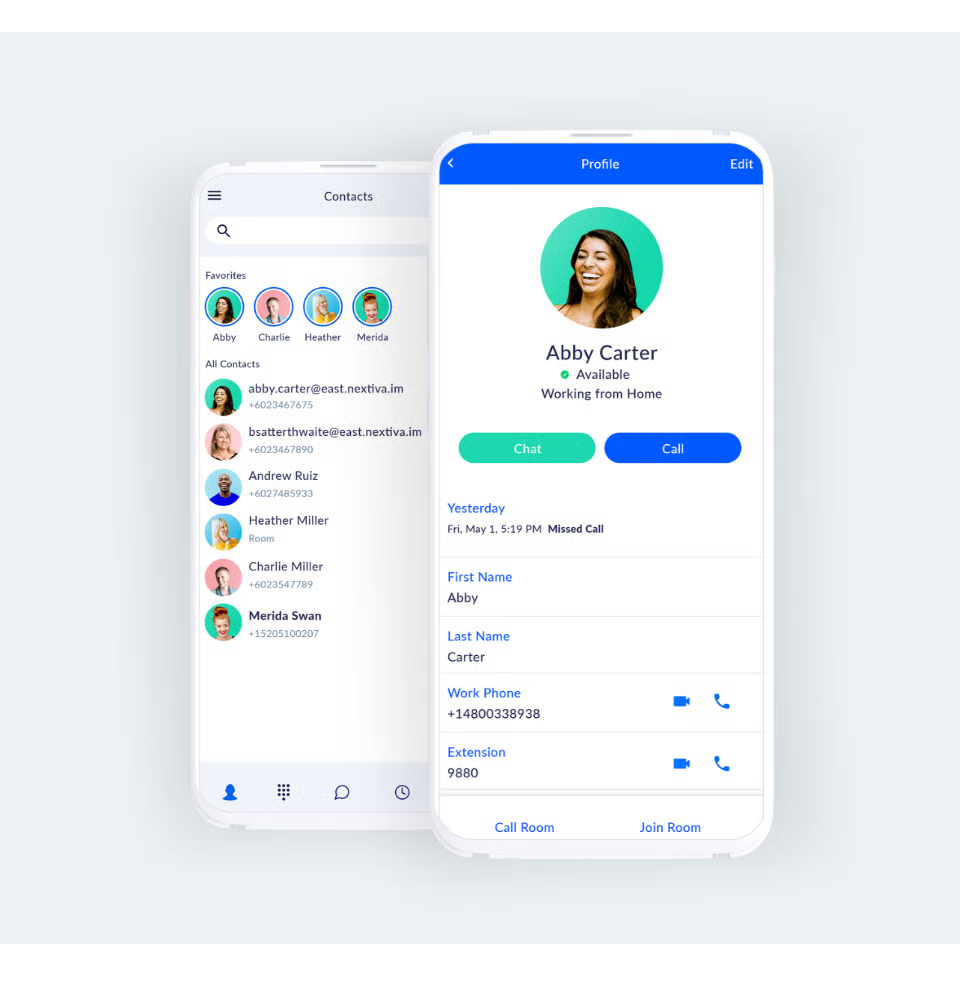
Nextiva delivers a cloud phone system with customer relationship management integration focus. The platform targets North American businesses prioritizing ease of use and reliable voice quality.
Key features:
- Unlimited voice and video calling
- Auto attendant with custom greetings
- Voicemail to email transcription
- CRM integrations with contact screen pops
- Team collaboration with file sharing
Benefits:
- Simple setup process enables rapid deployment
- CRM integration provides customer context during calls
- Dedicated account management for enterprise customers
6. Dialpad
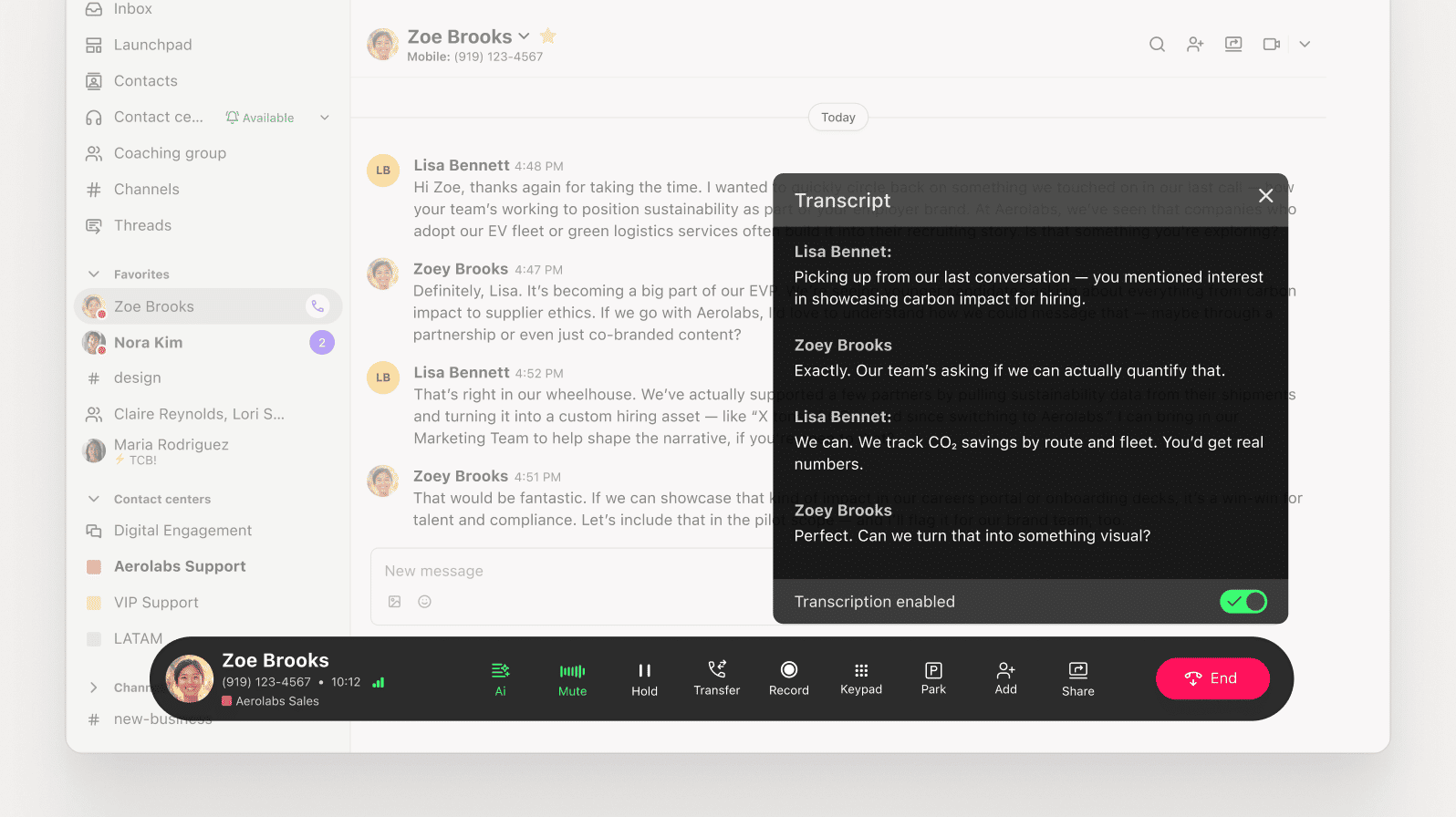
Dialpad brings AI-driven voice intelligence to cloud PBX, offering real-time transcription and sentiment analysis during phone calls. The platform emphasizes automation and coaching capabilities.
Key features:
- Real-time call transcription with searchable history
- AI-powered call routing based on conversation context
- Voice intelligence analytics for coaching insights
- Unlimited calling with SMS and MMS
- Mobile app with full feature parity
Benefits:
- AI transcription eliminates manual note-taking during customer conversations
- Sentiment analysis helps managers identify coaching opportunities
- Cross-device functionality maintains consistency between office and remote work
7. Zoom Phone
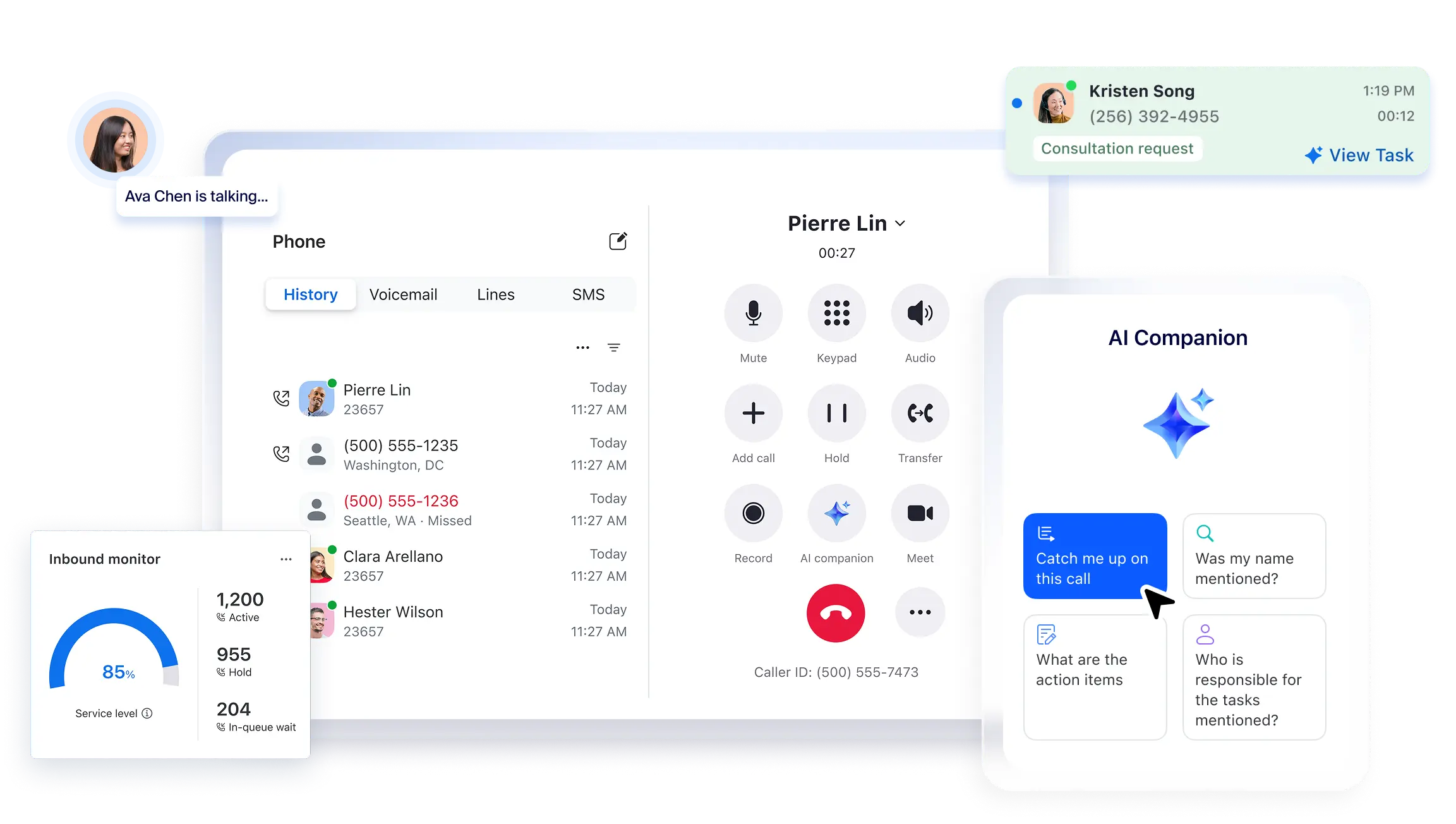
Zoom Phone extends the Zoom Meetings platform with integrated cloud voice capabilities. The system targets organizations already using Zoom for video conferencing that want unified communications.
Key features:
- Native integration with Zoom Meetings
- Call queues with hold music and announcements
- Power Pack add-on for advanced features
- Toll-free and local numbers
- SMS and MMS messaging
Benefits:
- Familiar Zoom interface reduces learning curve for existing users
- Single platform for voice and video simplifies vendor management
- Competitive pricing for organizations already paying for Zoom licenses
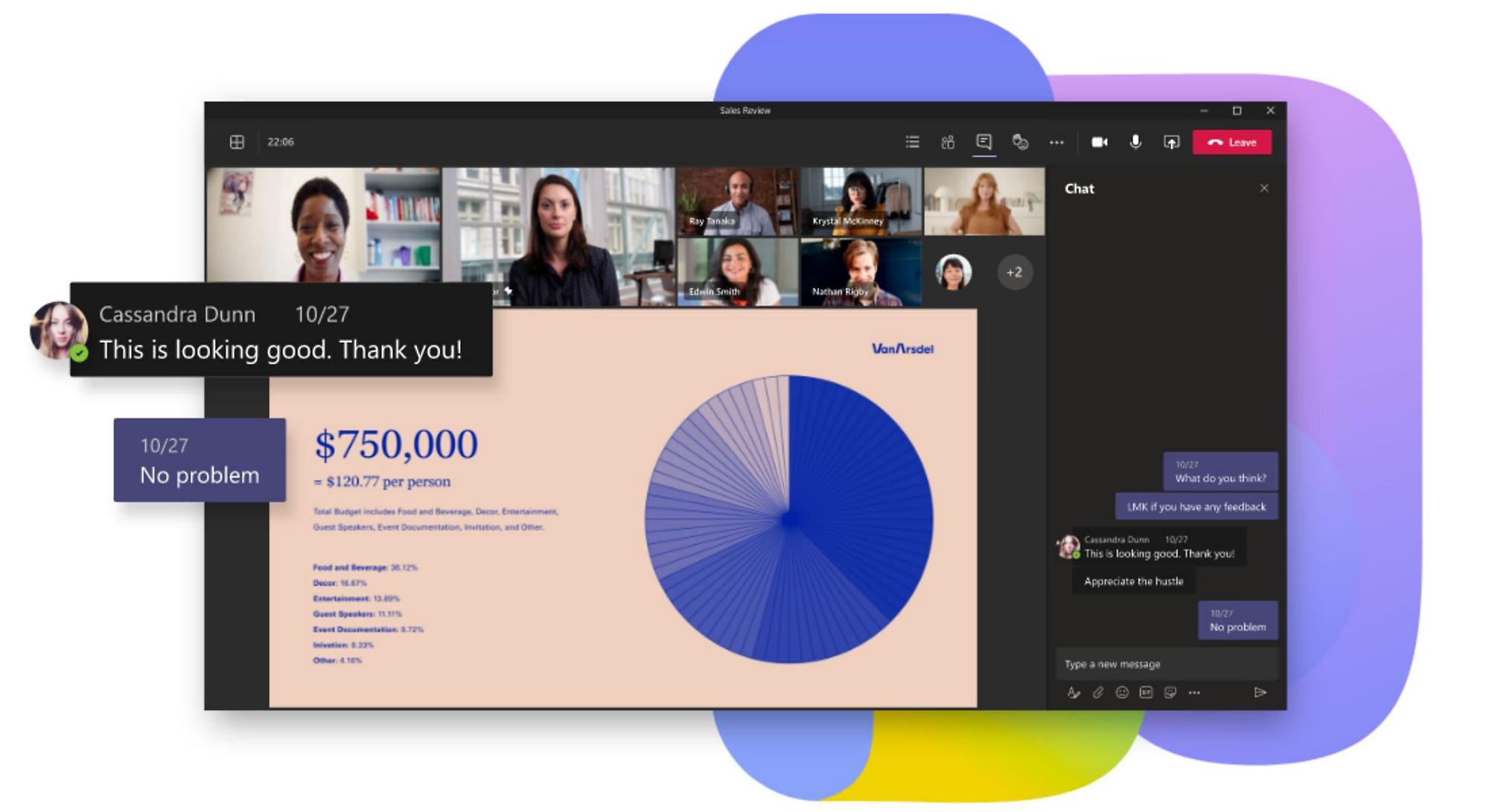
8. Microsoft Teams
Microsoft Teams includes cloud PBX functionality as part of its collaboration platform, using Direct Routing or Calling Plans for external connectivity. This system works best for organizations already invested in Microsoft 365.
Key features:
- Integrated with Microsoft 365 applications
- Auto attendant and call queues
- Voicemail with transcription
- Emergency calling capabilities
- Compliance recording options
Benefits:
- Leverages existing Microsoft licenses for cost efficiency
- Familiar interface for Microsoft 365 users
- Strong security and compliance features aligned with Microsoft standards
9. Cisco Webex Calling
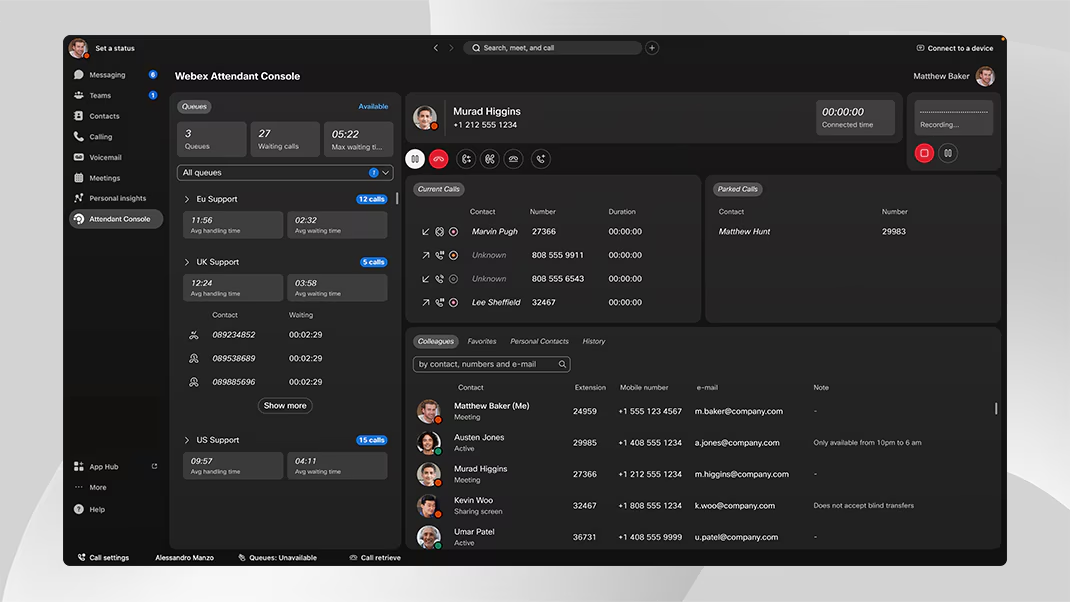
Cisco Webex Calling provides enterprise-grade cloud voice services with Cisco's networking and security heritage. The platform serves large organizations requiring robust security controls and established vendor relationships.
Key features:
- Enterprise call routing with survivability options
- Webex Control Hub for centralized management
- Integration with Cisco collaboration tools
- Certified for FedRAMP and other compliance frameworks
- Hybrid deployment options
Benefits:
- Strong security controls meet stringent enterprise requirements
- Hybrid deployment flexibility accommodates complex infrastructure needs
- Cisco ecosystem integration leverages existing network investments
Core Enterprise Features for Cloud PBX
Enterprises need more than basic calling functions, so the right cloud PBX must deliver capabilities that support global operations, varied regulations, and complex routing requirements.
The following features form the foundation that keeps voice reliable as your business expands and your CX environment becomes more interconnected:
- Security and compliance: Protect voice traffic with TLS and SRTP, enforce role-based permissions, and ensure the platform supports frameworks such as SOC 2, GDPR, and PCI. Strengthen governance by standardizing access and meeting regional regulatory needs.
- Global coverage and number sourcing: Operate across multiple countries, source numbers in difficult markets, and use TrueLocal™ dialing to create a familiar local presence for outbound calls.
- IVR and intelligent routing: Support multi-region Automatic Call Distribution (ACD), adjust flows with time-based routing, and apply failover logic that keeps calls moving even when conditions change.
- Call quality monitoring and diagnostics: Track MOS, jitter, and packet loss in real time, and run number testing across geographies to confirm performance before issues escalate.
- Integrations: Connect calling to CCaaS and UCaaS platforms, CRMs, and automation tools through APIs so your CX and internal workflows stay unified.
- Scalability and reliability: Ensure consistent uptime with cloud redundancy and multi-site failover, and scale usage or regions without adding new PBX equipment.
➜ Did you know?
Only a few cloud PBX platforms support full global scale, and AVOXI is one of those. AVOXI provides coverage in more than 150 countries, along with TrueLocal™ caller ID to improve answer rates in international markets. It also integrates directly with platforms such as Genesys, NICE, Five9, Microsoft Teams, and Zoom, which helps you unify routing, analytics, and CX workflows under one global system.
How to Choose a Cloud PBX Provider
Once you understand which capabilities matter most, you can evaluate providers through a framework that reflects enterprise priorities rather than small-office needs. The right partner supports your global footprint, reduces complexity, and delivers the visibility required to maintain stable performance across regions. Here's what to look for in a provider:
- Global number coverage and routing: Confirm that the provider supports all the countries you rely on and can maintain dependable routing across borders. Assess how they handle regulatory barriers and the consistency of their international call paths.
- Call quality diagnostics: Choose a PBX solution that offers deep troubleshooting tools rather than surface metrics. Look for real-time visibility into call behavior so IT teams can address issues quickly.
- CCaaS and UCaaS integrations: Ensure the platform integrates with the systems your teams already use, including Genesys, NICE, Five9, Microsoft Teams, Zoom, or your CRM.
- Compliance: Review how the provider manages data handling, voice regulations, and jurisdiction-specific rules. Confirm that its certifications and audit practices match your industry needs.
- Migration support: Evaluate how well the provider supports multi-country porting, legacy transitions, and phased rollouts. Strong onboarding reduces disruption and simplifies global adoption.
- Support model: Select a provider with responsive, enterprise-level support that understands international environments and can help with routing, carrier coordination, and number management.
- Vendor consolidation: Prioritize platforms that can centralize global numbers and routing so you can retire fragmented carrier setups and simplify long-term management.
This framework helps you choose a cloud PBX that fits your global strategy and supports your organization as it evolves.
How to Migrate from On-Prem PBX to Cloud
Once you select a provider, the next step is planning a transition that supports your global footprint without creating unnecessary disruption. A phased approach like below gives you the advantage of validating performance early, resolving issues gradually, and moving each region into the cloud at a pace that feels manageable for your teams.
Step 1: Assess Existing Architecture
A smooth migration starts with a clear view of how your current voice environment functions. This involves documenting your numbers, carriers, and routing paths so you understand how traffic moves today. As you do this, note any PBX hardware that still sits in the critical path and any workflows tied to your existing system.
It helps to capture a few details early so nothing slows you down later:
- Integration points that rely on legacy PBX functions, such as CRM pop-ups or recording workflows
- Regional compliance rules that may influence when and how certain numbers can move
- Features or routing behaviors that must remain intact after the transition
With this groundwork in place, you can decide which regions are ready to migrate and which ones require adjustments first.
Step 2: Develop a Multi-Country Porting Strategy
Once the current environment is mapped, you can focus on moving numbers into the cloud. Porting differs by country, so treating it as a structured program rather than a one-time task keeps everything aligned. Most enterprises begin by gathering required documents, confirming timelines, and planning porting waves that match operational priorities.
After scheduling each wave, build in a short validation period. Testing inbound and outbound behavior right after each cutover helps you confirm that callers reach the correct teams and that routing behaves as intended. This step protects business continuity before you move larger regions.
Step 3: Test and Validate for International Routing
Before you scale the migration, it is important to verify how routing performs across borders. Short test cycles from different countries help you confirm dialing patterns, caller ID presentation, and overall stability. Many enterprises also run a small pilot group so they can observe real usage in a controlled way.
To guide this phase, focus on a few practical checks:
- Cross-regional test calls to confirm reachability and accurate routing
- Monitoring for latency or jitter that might affect high-volume markets
- Adjustments to redundancy paths before more regions come online
These early refinements reduce surprises later and create a more predictable experience for users and customers.
How to Ensure Call Quality in International Environments
Maintaining stable call quality across borders requires more than basic monitoring. Global teams need continuous visibility into network behavior, routing performance, and local dialing conditions so they can detect issues before customers feel them. A cloud PBX helps you gain that visibility, but pairing it with the right practices ensures performance stays consistent as your footprint grows.
Here are the core areas to focus on:
- MOS and jitter monitoring: Track real-time MOS and jitter trends for each region so you can spot degrading routes early and make adjustments before they affect callers.
- Redundant carrier routing: Use providers that support fast failover between carriers so incoming calls keep flowing, even when a regional path experiences congestion or an outage.
- SIP trunk optimization: Review capacity, routing rules, and traffic patterns regularly, then tune your trunks to support the markets that drive the highest volume.
- Local caller ID (TrueLocal™): Present familiar local numbers to improve answer rates and ensure outbound calls align with regional expectations.
- Geographic number testing: Test inbound and outbound behavior from target countries on a recurring schedule to confirm routing accuracy, caller ID formatting, and reachability.
With these practices in place, your teams experience fewer surprises, your customers see consistent quality, and your international environment stays resilient even as new regions come online.
Choose a Cloud PBX Built for Global Scale
Your PBX supports far more than internal calls. It shapes the customer experience across every region, so it needs a platform that performs reliably wherever your teams operate. As you expand and connect voice to CCaaS or new markets, a cloud PBX built for global scale becomes essential.
AVOXI can support this direction by providing number coverage in more than 150 countries, TrueLocal™ outbound presentation, real-time quality visibility, and integrations with platforms such as Genesys, NICE, Five9, Microsoft Teams, and Zoom. These capabilities help you consolidate carriers, strengthen routing, and manage your global voice footprint from one place.
If you want to see how this works in practice, you can request an AVOXI demo and explore how a globally focused cloud PBX can support your next stage of growth.
FAQs About Choosing a Cloud PBX Provider