
Softphone vs. Hardphone: Making the Right Choice for Enterprise Voice Architecture
The softphone versus hardphone debate usually starts with a simple question: Which phone should we deploy? If you're leading voice infrastructure for a global enterprise, the real question runs deeper. This isn't about choosing a device. It's about designing an enterprise phone system that scales across regions, integrates with your CCaaS and UCaaS platforms, and adapts as teams shift between office, remote, and hybrid environments.
Most enterprises don't pick one endpoint type. They build for use case fit. Contact center agents might rely on browser-based softphones that integrate with Genesys or Amazon Connect, while executives in secure facilities prefer dedicated desk phones.
This guide helps you evaluate both options through what actually matters: performance, security, scalability, and global operations. You'll see where each adds value and why your voice architecture determines how well either performs.
Key Takeaways
- Softphones and hardphones use identical voice protocols (SIP, RTP, codecs), so call quality depends on your network architecture and QoS policies, not the endpoint itself.
- Modern security centers on identity-based access (MFA, SSO) rather than physical devices, making properly configured softphones as secure as hardphones.
- Hybrid endpoint strategies that match device type to user role and environment deliver better outcomes than choosing one over the other.
- Your voice platform's capabilities determine endpoint flexibility far more than the devices themselves, making platform architecture the critical decision.
TL;DR: Softphones vs. Hardphones at a Glance
| Category | Softphone | Hardphone |
|---|---|---|
| Primary role | Flexible, application-based calling for distributed users | Dedicated device for fixed or controlled environments |
| Deployment | Fast provisioning through software | Requires physical installation and logistics |
| Mobility | Supports hybrid and remote work | Best for on-site workstations |
| Platform fit | Strong for CCaaS/UCaaS integrations | Strong for shared desks and secure spaces |
| Key dependency | Identity and device management | Network and physical infrastructure |
What Is a Softphone?
A softphone is a software application that enables voice calls over the internet using a computer, laptop, or mobile device. Instead of relying on dedicated hardware, it turns your existing device into a business phone by connecting to your organization's Voice over Internet Protocol (VoIP) or Session Initiation Protocol (SIP) infrastructure.
Users typically interact with softphones through a desktop client or mobile app, using a headset or the device's built-in microphone and speakers.
What Is a Hardphone?
A hardphone is a physical desk phone designed specifically for making and receiving voice calls over IP networks. These devices connect to your VoIP infrastructure through ethernet or Wi-Fi and include dedicated hardware like buttons, displays, and handsets.
Hardphones range from basic single-line models to advanced conference phones with touchscreens, multiple line appearances, and programmable keys for functions like transfer, hold, and speed dial.
What’s the Difference Between Softphones and Hardphones?
The distinction between softphones and hardphones goes beyond "software versus hardware." Both endpoint types connect to the same cloud voice platforms, use identical protocols, and rely on your network to deliver calls.
The meaningful differences emerge in how each endpoint integrates into your broader architecture, how you deploy them at scale, and which use cases they serve best in the following areas.
Device-Based vs. Software-Based Calling
Softphones integrate calling in the same workspace as collaboration or CRM tools, which helps workflows stay connected without relying on a fixed station. Their application-based model supports environments where users move across devices or locations.
Hardphones remain tied to a single desk or shared space and provide tactile controls through SIP hardware. They offer predictable behavior for teams that depend on dedicated devices.
Both endpoint types use SIP for call setup and RTP for media transport, so they follow the same signaling path. This shared foundation means form factor alone does not determine capability.
Network and Platform Dependencies
Endpoints ultimately reflect the capabilities of your voice platform. Registration models, routing rules, identity controls, and integrations determine how each endpoint behaves and how easily you can support mixed environments.
Several factors shape deployment choices:
- SIP connectivity that governs how endpoints register
- Session Border Controllers (SBCs) that secure signaling paths
- CCaaS and UCaaS integrations that surface calling features inside daily tools
- Identity management that controls access and roles
When these components operate through a unified communications platform, you gain consistent provisioning and governance across softphones and hardphones. This helps avoid device-driven limitations and supports a flexible endpoint strategy across regions.
Performance and Reliability Considerations
Call quality concerns dominate most endpoint discussions, but the real question isn't whether softphones or hardphones deliver better audio. It's where quality issues actually originate, and which architectural factors you can control to prevent them across the following dimensions.
Network, Bandwidth, and Call Quality Impact
Softphones and hardphones use the same signaling and media paths, so they respond similarly when the network experiences stress. Four variables influence clarity and stability:
- Latency increases delays when packets take longer to travel between endpoints.
- Jitter creates uneven audio when packet timing varies.
- Packet loss reduces clarity when packets drop along the route.
- Routing paths affect consistency when traffic moves across congested or inefficient networks.
These conditions affect both endpoint types because they rely on identical transport protocols. Improving voice quality, therefore, means strengthening network performance and monitoring traffic patterns across your regions.
Business Continuity and Failure Scenarios
Resilience depends on how your voice platform handles disruptions. Failover, geo-redundancy, and carrier diversification maintain service when networks fluctuate, and these protections apply to all endpoints.
Hardphones require stable local connectivity and power, so issues at a specific site can restrict availability. Softphones allow users to reconnect through approved alternate networks, which support continuity during localized outages.
Focusing on platform-level continuity gives you more control over reliability than comparing endpoint types.
Security and Compliance Implications
Security discussions around endpoints often default to outdated assumptions. Hardphones "feel" safer because they're physical and locked to a desk. Softphones raise concerns because they run on devices that also access email, browse the web, and connect to public Wi-Fi. But modern security architecture doesn't center on device ownership. It centers on identity, encryption, and access control policies that apply regardless of endpoint type in the areas below.
Device Security vs. Identity-Based Access
Hardphones create a perception of safety because the device stays on a desk. The fixed location feels controlled, yet the device still depends on authentication, provisioning rules, and network boundaries. If those controls weaken, the physical form offers limited protection.
Softphones rely on identity-driven access, which gives you stronger and more flexible enforcement. Users authenticate through credentials that follow them across devices, and you can apply policies that reflect role, location, or compliance needs. This approach supports distributed teams because security ties to the individual instead of the hardware.
Encryption works the same way for both endpoint types. Transport Layer Security (TLS) protects signaling, and Secure Real-Time Transfer Protocol (SRTP) protects the audio stream. When your platform enforces these standards, you give softphones and hardphones identical protection during call setup and transmission.
Regulatory and Compliance Considerations
Global operations add requirements that influence how you manage endpoints across regions. Regulations focus on how you secure call data, control user access, and document communication activity. These expectations apply to the entire voice environment, so compliance planning sits above individual devices.
Factors that typically shape compliance decisions include:
- Data residency rules that determine where recordings and logs are stored
- Industry retention policies that guide how long you keep records
- Access controls for sensitive customer details
- Audit trails that depend on centralized logging and reporting
A unified cloud voice platform helps you apply these controls consistently across softphones and hardphones. This structure reduces regional gaps and keeps compliance tightly aligned with your architecture rather than device behavior.
Scalability and Operational Flexibility
Scalability influences how well your voice environment supports growth and shifting workforce patterns. Endpoint choices affect how quickly you can onboard users, adjust capacity, and maintain consistent operations across locations. A clear strategy helps you support expansion without increasing complexity for IT teams or slowing down activation timelines in the following ways:
Remote and Hybrid Work Enablement
Softphones became essential for distributed workforces because they activate quickly and require no hardware shipment or installation. Users sign in on approved devices and gain immediate access to calling features, which shortens onboarding and reduces IT workload.
This flexibility also supports hybrid schedules. Calling follows the user across locations, so teams maintain consistent communication whether they work from the office, home, or in transit. The ability to manage access centrally helps you scale global hiring without adding operational friction.
Global Deployments and Number Strategy
International operations introduce logistical constraints that affect how endpoints roll out across regions. Hardphones rely on procurement, shipping, and local hardware standards, which can slow activation and vary by country.
Softphones avoid many of these delays because teams provision them through configuration. This allows faster alignment with global numbering plans and quicker activation in new markets.
When deployment accounts for regional rules, carrier differences, and local infrastructure, organizations can scale internationally while keeping operations consistent.
How to Choose the Right Mix for Enterprise Voice
Choosing the right mix for enterprise voice comes down to how your teams work and how your voice platform supports their workflows. A hybrid approach usually serves enterprises best because it lets you assign endpoints based on role requirements, operational environments, and integration needs. Here are the key considerations.
Contact Center Agents vs. Office and Knowledge Workers
Contact center agents often rely on softphones because their work happens inside applications that manage customer interactions, analytics, and workflow tools. Keeping call controls on screen supports efficiency and gives supervisors clearer visibility into activity. Softphones also help agents adapt quickly when staffing or location changes occur.
Knowledge workers benefit from the same flexibility when calling sits alongside collaboration and productivity tools. Identity-based access allows them to move between devices without losing functionality.
Hardphones still serve specific environments that rely on dedicated hardware. Shared desks, controlled-access spaces, and facilities with strict operational procedures often require a physical device that stays tied to a known location. These situations benefit from the predictability and durability of a fixed endpoint without shifting how other teams work.
Voice Platform and Integration Dependencies
Your platform influences endpoint flexibility more than the device itself. CCaaS and UCaaS systems shape how calling features appear inside desktops or collaboration apps, while SIP architectures determine how endpoints authenticate and maintain sessions. When these elements work together, you can support mixed environments without creating additional workload for IT.
Platform-agnostic voice gives you more control because it supports both softphones and hardphones without imposing device-specific limitations.

Did you know? AVOXI supports mixed-endpoint environments
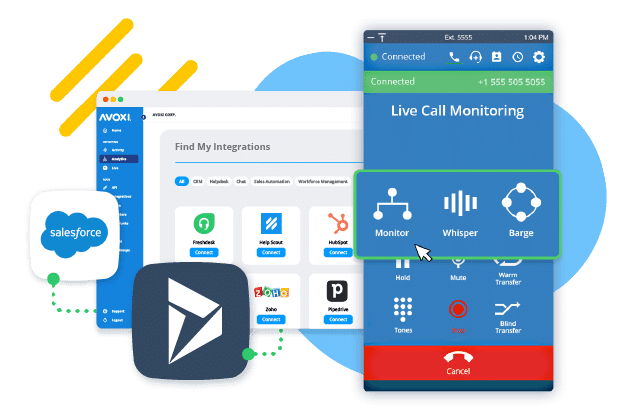
AVOXI’s cloud voice platform centralizes SIP routing, identity controls, and number management so teams can manage softphones and hardphones from one place. This approach keeps your policies consistent across regions and supports flexible deployment without changing device strategy.
Endpoints Matter, but Voice Architecture Matters More
Choosing between softphones and hardphones rarely comes down to a single answer. The outcome depends on how each endpoint fits your operating model and how well your voice environment supports change across teams and regions. When decisions focus only on devices, they often overlook the systems that shape voice outcomes at scale.
Call quality, security, growth, and compliance all depend on the platform that manages routing and access. Calls may start from different endpoints, but the underlying architecture determines how voice performs and scales across locations.
When voice architecture supports flexibility and global reach, teams can deploy softphones or hardphones where each makes sense. Platforms built for enterprise voice, such as AVOXI, support this approach by managing routing, numbering, identity, and endpoints through a single cloud foundation.
If you are reviewing how your enterprise phone system supports mixed endpoints, assessing the strength of your voice architecture is a practical next step. Schedule a demo to learn more about AVOXI.
FAQ About Softphones vs. Hardphones