
SIP PBX: Benefits, Architecture, and How to Choose the Right Solution
SIP PBX represents a fundamental shift in how enterprises approach voice infrastructure. Previously, organizations relied on hardware-dependent systems with fixed capacity and vendor lock-in, but SIP PBX shifts all that into software-based platforms that:
- Scale dynamically
- Integrate with modern communications stacks
- Deliver analytics visibility that legacy systems simply can't provide
But is it the right fit for your business? This guide will help you evaluate SIP PBX, understand how it compares to traditional systems, and build a clearer picture of what modernization and vendor consolidation actually look like in practice—so you can make an informed choice.
Need a SIP PBX strategy that supports global voice performance?
See how AVOXI helps enterprises modernize telephony with global SIP trunking, flexible infrastructure, and better visibility across their voice stack.
What Is SIP PBX and How Does It Work?
A Session Initiation Protocol Private Branch eXchange (SIP PBX) is a software-based phone system that uses SIP to manage voice communications over IP networks, so it routes phone calls through software over internet connectivity rather than circuit-switched infrastructure.
It scales dynamically, integrates with modern platforms, and adapts to changing business requirements without hardware replacements.
At its foundation, SIP PBX consists of three core elements:
- SIP trunking, which replaces traditional phone lines with internet-based connections so you can provision numbers globally and route calls across regions without physical infrastructure
- Intelligent call routing, which directs inbound and outbound calls based on business rules, time of day, agent availability, or custom logic—capabilities that would require expensive add-ons in legacy communications systems
- Integration capabilities, which connect voice to your CRM, contact center platform, and analytics tools through APIs, and turns communications data into actionable insights
For enterprises evaluating cloud migration, this architectural foundation clarifies why SIP PBX is more than a cost-saving measure. You gain visibility into call quality, routing efficiency, and performance metrics that help you treat voice as a strategic asset rather than a utility.
Key Benefits of SIP PBX for Business Communications
The real value of SIP PBX lies in operational efficiency, strategic flexibility, and up-to-the-minute versioning. SIP PBX can solve vendor sprawl and infrastructure complexity by scaling capacity without hardware procurement cycles, deploying new capabilities through software updates, and turning voice data into actionable insights, among other benefits.
Cost Savings and Scalability Advantages
SIP PBX eliminates redundant hardware, reduces maintenance overhead, and scales capacity without capital expenditure or long procurement cycles, lowering overall costs and limitations.
Traditional PBX systems require up-front investment in proprietary hardware, ongoing maintenance contracts, and specialized technician support for even minor configuration changes, but SIP PBX shifts this model entirely:
- Pay for capacity as needed: You can add or remove lines easily to use only exactly what you need.
- Deploy new lines or locations through software configuration: You're not locked into fixed channel counts or forced to overprovision to accommodate future growth.
- Eliminate recurring costs of on-premises maintenance: You won’t have to manage multiple carriers, contracts, and support relationships across your organization.
This transition from capital expense to operational expense gives you greater budget predictability and frees resources for strategic initiatives.
Enhanced Features and Functionality
SIP PBX delivers capabilities through incremental upgrades that legacy systems can't match. For example, advanced call routing comes standard and is all configured through software rather than programmed into physical equipment.
Combining this and unified communications integrations that connect voice to your CRM, helpdesk software, and collaboration tools, you get:
- Easy call routing based on time of day, caller location, agent availability, or skill set
- Click-to-dial functionality
- Screen pops with caller context
- Automatic call logging
- Real-time analytics with visibility into call quality metrics, answer rates, queue performance, and agent productivity
Plus, mobile and remote capabilities extend your voice infrastructure beyond the office without complex workarounds.
Agents can take and make calls from anywhere using softphones or mobile apps, with the same routing rules and call controls as desk-based colleagues—a meaningful advantage for enterprises managing hybrid teams or seasonal capacity fluctuations.
Improved Reliability and Disaster Recovery
Legacy voice systems are prone to single points of failure, like:
- Physical PBX cabinets
- Single carrier connections
- On-premises servers that go offline during power outages
SIP PBX addresses this by distributing voice services across cloud infrastructure with built-in redundancy. If one carrier experiences an outage, traffic reroutes through backup SIP trunks. If a primary data center becomes unavailable, calls automatically shift to geographically distributed endpoints.
Modern SIP PBX platforms also help monitor system health and performance, enabling proactive response before minor issues escalate into outages. For enterprises managing global operations or customer-facing call centers, this combination of architectural resilience and operational transparency makes disaster recovery a planned, tested strategy rather than a reactive scramble.
SIP PBX vs. Traditional PBX Systems
The choice between SIP PBX and traditional PBX can affect your total cost of ownership, operational flexibility, and ability to support distributed teams—all because of their separate infrastructure setups.
For telecom leads evaluating cloud migration, it comes down to operational agility and strategic positioning, not just cost reduction. A phased migration to cloud-based voice delivers incremental value while minimizing disruption, and it positions voice as a software-led capability that evolves with your business rather than a fixed asset that depreciates and constrains growth.
Technology and Infrastructure Differences
Traditional PBX relies on dedicated hardware appliances with physical phone lines connecting to the public switched telephone network (PSTN), which:
- Needs specialized equipment rooms, power and cooling infrastructure, and physical cabling throughout your facilities
- Uses circuit-switched technology, dedicating a physical connection for each call
- Requires separate systems in each location with expensive tie-lines to connect sites
SIP PBX runs voice traffic over your existing IP network using standard internet protocols, with no proprietary hardware to maintain, so it:
- Deploys on-premises, in private cloud environments, or as a fully managed service
- Uses packet-switched networks, breaking voice data into packets that share network resources efficiently and enabling advanced features like dynamic call routing and seamless failover
- Consolidates voice infrastructure into a unified platform that spans locations through your existing network
Cost and Feature Comparison
Traditional PBX requires significant capital investment in on-premises hardware, ongoing maintenance contracts, and dedicated IT resources for upgrades and troubleshooting. Feature additions like call recording, advanced routing, or CRM integration often come with separate licensing fees and implementation costs.
SIP PBX offers a lot more flexibility—you pay for what you use, scale incrementally without hardware procurement cycles, and access enterprise-grade features as part of the platform. Plus, maintenance and updates happen automatically, eliminating scheduled downtime or vendor site visits.
How to Choose the Right SIP PBX Solution
Your evaluation framework should prioritize global coverage and carrier-grade reliability, integration capabilities with your existing CCaaS and UCaaS platforms, and analytics-driven insights that help you optimize voice performance over time.
Global coverage is non-negotiable if you operate across multiple regions. Your SIP PBX provider should offer direct access to local numbers and carrier-grade infrastructure in every market you serve, not just resold capacity or limited geographic reach.
Essential Technical Requirements and Deployment Options
SIP PBX relies on consistent, low-latency internet connectivity to deliver carrier-grade call quality. Most enterprise deployments require dedicated bandwidth with Quality of Service (QoS) policies to prioritize voice traffic.
Codec support and interoperability matter more than many teams anticipate—your SIP PBX must support industry-standard codecs like G.711 and G.729 while maintaining compatibility with existing endpoints, whether those are IP phones, softphones, or integrated CCaaS platforms.
Deployment options typically fall into three categories:
- On-premises: Offers maximum control but requires internal expertise and capital investment
- Cloud-hosted: Eliminates infrastructure overhead and enables faster scaling
- Hybrid: Addresses compliance requirements or latency-sensitive use cases while still modernizing the broader stack
Security and compliance capabilities should be non-negotiable, so look for solutions that support encrypted SIP (TLS/SRTP), robust authentication mechanisms, and compliance certifications relevant to your industry, including PCI-DSS or HIPAA if applicable.
Vendor Evaluation Criteria
The right vendor should function as a strategic partner capable of supporting your voice infrastructure today while adapting to your evolving requirements across regions, platforms, and business models. Look for providers with these key capabilities:
- Global coverage and carrier relationships: Verify that the provider offers native local numbers and carrier-grade connectivity in your target markets, instead of resold capacity.
- Integrations: Your SIP PBX solution needs to connect with your existing CCaaS platforms, CRM systems, and analytics tools without requiring custom development or middleware. Ask about pre-built integrations, well-documented APIs, and a track record of supporting enterprise-scale deployments.
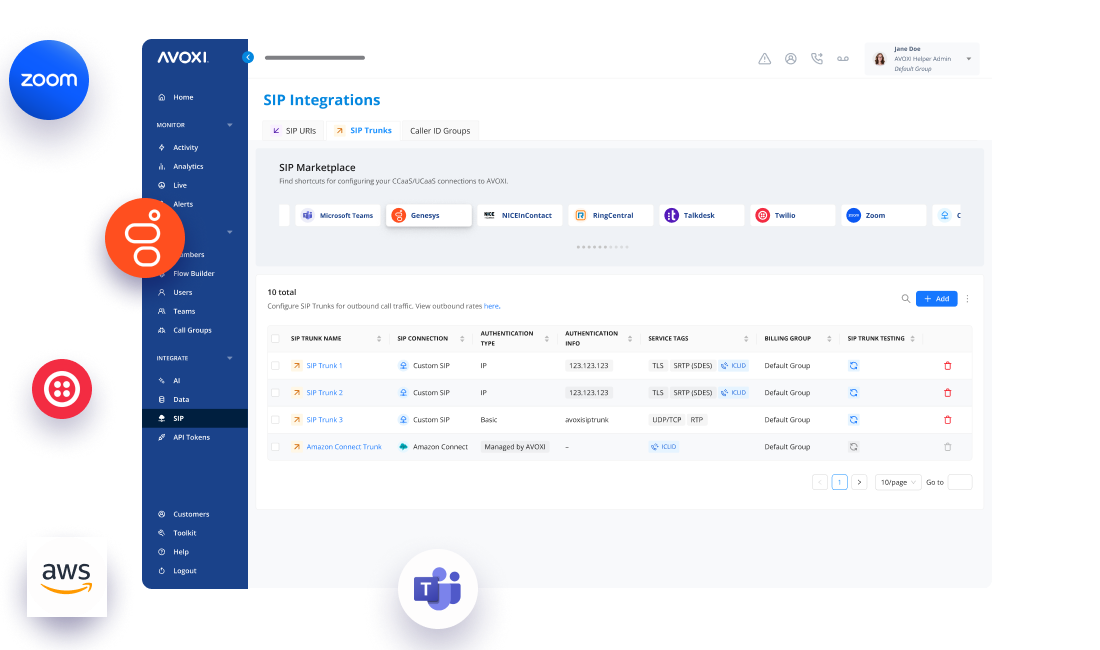
- Analytics and visibility: Voice shouldn't be a black box—you need real-time insights into call quality, routing performance, and usage patterns to identify issues before they impact customer experience.
- Support structure and SLAs: Enterprise voice operations require responsive support teams who understand global telecom complexity, so review escalation processes, uptime guarantees, and incident response times to ensure they align with your operational requirements.
Implementing SIP PBX
Successful SIP PBX deployment requires strategic planning and the right partner, and voice modernization should align with your broader CCaaS and UCaaS initiatives.
Start by mapping your current voice infrastructure and identifying integration points with existing platforms, then look for providers with proven global coverage, carrier-grade reliability, and software-led management capabilities that give you visibility into call quality, routing performance, and usage patterns across regions.
AVOXI combines extensive international reach across 150+ countries with analytics-driven insights that help you treat voice as a strategic asset.
This approach enables you to modernize infrastructure incrementally, validate improvements through data, and scale operations without disrupting business continuity.
Explore how AVOXI’s voice services can benefit your business and support your long-term goals, and schedule a demo today.
FAQs about SIP PBX