
SIP vs VoIP: How They Apply to Global Voice Infrastructure
Evaluating Session Initiation Protocol (SIP) and Voice over Internet Protocol (VoIP) at an enterprise level requires a broader lens than basic feature comparisons. You’re deciding how each model will support global communication, integrate with your Unified Communications as a Service (UCaaS) or Contact Center as a Service (CCaaS) platforms, and meet regulatory or routing needs across multiple regions. These considerations shape the long-term stability of your voice environment and influence how easily you can scale into new markets.
This guide focuses on the real factors that determine whether SIP or VoIP telephony can support global operations. You will see how SIP trunking enables multi-region routing and platform interoperability and where foundational VoIP implementations begin to limit scale.
Key Takeaways
- VoIP converts voice into digital packets transmitted over internet protocol networks, replacing traditional phone lines with a more flexible communication method.
- SIP is a signaling protocol that manages how communication sessions start, maintain, and terminate across voice, video, and messaging channels.
- VoIP works well for straightforward voice communications, while SIP trunking provides the scalability and routing flexibility required for multi-region contact centers.
- Enterprise voice architecture decisions involve global number availability, compliance frameworks, porting complexity, and vendor consolidation strategies that basic implementations overlook.
What Is VoIP?
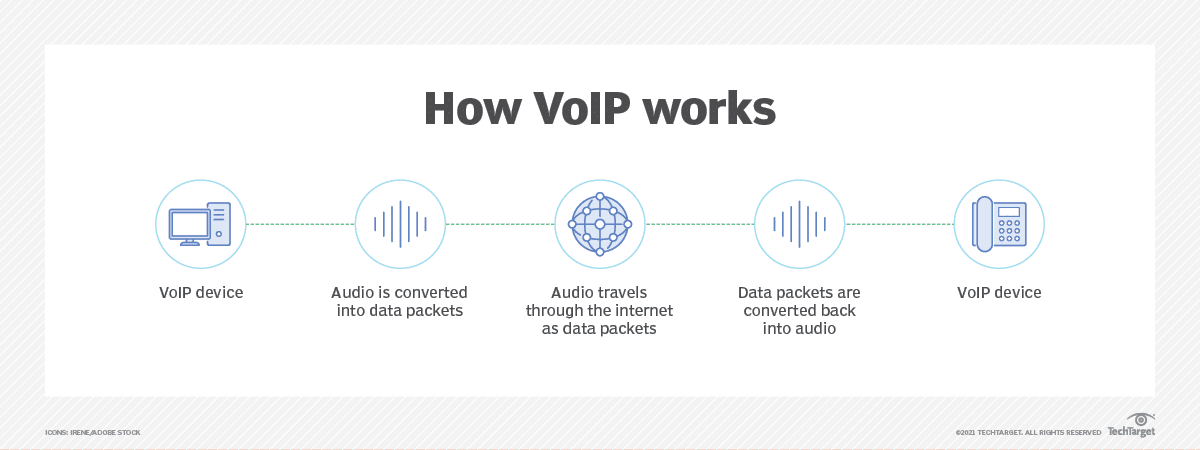
VoIP transmits voice over internet protocol by converting audio into voice data packets that travel across internet-based IP networks. It replaces traditional phone lines with software-based calling and allows teams to make and receive voice calls through a standard internet connection.
At a basic level, VoIP handles everyday calling well. Its limitations become clearer, however, as deployments expand across regions because maintaining consistent quality becomes harder. Carrier reach, interconnect design, bandwidth allocation, and available Quality of Service (QoS) settings vary by provider, which leads to uneven performance. Enterprise-ready VoIP service reduces these gaps by using more reliable routing, broader carrier access, and infrastructure that sustains quality during peak demand.
How Do Businesses Use VoIP?
VoIP supports everyday phone calls and helps teams stay connected without dedicated telecommunications hardware. Companies use it to:
- Support remote and hybrid work with softphones, smartphones, and mobile apps
- Modernize offices by replacing older private branch exchange (PBX) systems with VoIP systems
- Give satellite locations a simple way to handle internal and external calling
- Access advanced features such as call forwarding, voicemail, and basic routing tools
These capabilities form a solid starting point for cloud voice, and SIP later adds the control needed for broader, multi-region deployments.
What Is SIP Trunking?
SIP trunking uses a session initiation protocol to create and control communication sessions over IP networks. It replaces traditional landline telephone lines with software-based calling and allows teams to make and receive calls through a standard internet connection.
At the enterprise level, SIP serves as the control layer that coordinates how sessions move between platforms and carriers, which makes it essential for multi-region environments and large-scale routing. Recent industry research shows that nearly 65% of North American companies now use SIP trunking services as part of their communication strategy, reflecting its shift from optional technology to core infrastructure.
How Does SIP Trunking Work?
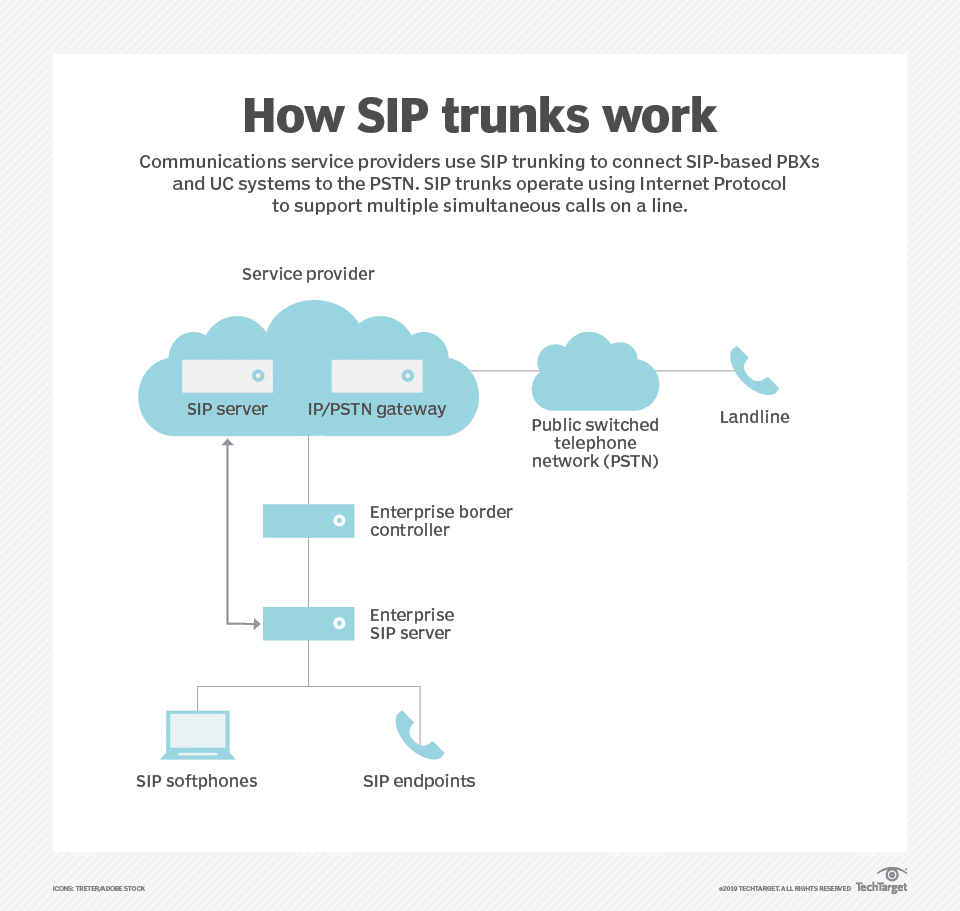
SIP trunking functions as the connection between your voice platform and the public network. Software-based trunks exchange voice signals and signaling instructions and transport media streams so your PBX or UCaaS/CCaaS platform can place and receive calls.
Within an enterprise architecture, SIP trunking:
- Links on-premises and cloud systems to global carriers
- Applies routing rules that guide traffic across regions
- Supports continuity through failover paths when disruptions occur
This mechanism ensures your routing decisions, carrier preferences, and network design work together consistently.
How Do Businesses Use SIP?
Organizations adopt SIP when they need predictable performance and centralized control across multiple sites. Common uses include:
- Supporting UCaaS or CCaaS platforms that depend on consistent signaling
- Coordinating voice services across hybrid environments
- Consolidating carriers to simplify management
SIP also supports growth by giving teams a scalable way to expand into new regions without rebuilding their communication stack.
SIP vs VoIP: Key Differences That Matter for Global Voice
VoIP carries voice over IP networks, while SIP adds the signaling that controls how each session starts, routes, and completes. Put even more simply, VoIP delivers the audio, and SIP directs how that audio moves across carriers, platforms, and regions. As your footprint expands, this signaling layer becomes more important because it helps maintain routing consistency and supports the platforms your teams rely on.
VoIP meets basic calling needs, but SIP fits environments that require flexible routing, multi-region coverage, or additional media support. And because SIP works with voice, video, and messaging, it unifies communication channels and gives your architecture the structure it needs to scale without creating operational strain.
The table below highlights practical differences that influence enterprise design decisions.
| Feature | VoIP | SIP |
|---|---|---|
| Media types | Voice only | Voice, video, messaging |
| Scalability | Works well for limited footprints | Supports large, distributed deployments |
| Routing flexibility | Basic routing tied to provider defaults | Advanced routing across platforms and regions |
| Global deployment | Coverage varies by provider | Built for multi-region connectivity and carrier reach |
| Redundancy | Limited options depending on the service | Supports failover paths and diversified carriers |
| Security | Standard encryption varies | Often paired with TLS/SRTP and enterprise controls |
| Cost model | Lower cost entry | Moderate cost with broader capabilities |
When Enterprises Should Choose SIP, VoIP, or Both
Your voice architecture decision depends on deployment scale, geographic scope, and integration requirements. Most enterprise implementations combine VoIP for voice transmission with SIP for session management and carrier connectivity. Let's take a look at different use cases:
Small and Mid-Sized Businesses (SMB)
Smaller teams benefit from hosted VoIP phone system platforms because they offer reliable calling without requiring separate SIP infrastructure. This model works particularly well when your operations remain within a single country or a limited number of regions, since providers can optimize their networks locally.
Per-seat pricing also simplifies planning because costs rise predictably with headcount, which reduces the effort needed to forecast usage compared to managing concurrent sessions in a SIP environment.
High-Growth or Multi-Office Teams
As organizations expand across regions, VoIP alone becomes harder to manage. Each new location often requires its own provider, which increases operational overhead and complicates support. SIP trunking avoids this fragmentation by centralizing routing and capacity planning so new sites can come online without repeating the same setup work.
Growth also becomes more efficient because you adjust concurrent session capacity rather than provisioning full sets of user accounts, which shortens lead times during seasonal peaks or rapid hiring cycles. SIP-native architectures strengthen integrations as well, since applications that depend on call data or session control connect more consistently through a standardized signaling layer.
Global Contact Centers or Global Enterprises
Large-scale operations depend on SIP trunking because it provides the routing control and regional coverage they need to maintain consistent behavior across countries. SIP manages carrier connectivity and global routing, while CCaaS platforms (which use VoIP technology) handle agent workflows, Interactive Voice Response (IVR) logic, and Customer Experience (CX) functions. This separation lets each layer evolve independently without creating integration friction.
Hidden Factors That Enterprise Businesses Can't Ignore
Technical specifications tell only part of the story. The following factors determine whether your architecture scales smoothly across regions or becomes a source of recurring issues as your environment grows:
International Number Availability
SIP and VoIP only create value when you can secure and maintain the numbers your teams rely on. For many enterprises, this becomes the first barrier to global deployment because number availability varies dramatically across regions, especially in the Asia-Pacific (APAC), Latin America (LATAM), the Middle East, and Africa.
Provisioning challenges often include:
- Local address and business registration requirements
- Know Your Customer (KYC) documentation and in-country identity verification
- Inconsistent carrier coverage within the same country
- Regulations that restrict or completely block number transfers
These constraints create complexity that domestic VoIP providers are rarely equipped to support. Their networks and processes are built for SMB use cases in limited geographies, so they lack the interconnects and regulatory expertise needed for multi-market sourcing and long-term number management.
Local dialing expectations add another layer because customers are more likely to answer calls that display familiar regional numbers. Concepts such as TrueLocal™ help teams align outbound caller ID with local norms, supporting higher answer rates and improving CX outcomes without requiring separate providers in every region.
Number availability ultimately shapes your global voice strategy. It influences where you can expand, how quickly you can implement redundancy or failover paths, and whether your organization can maintain consistent service across dozens of countries.
Global Compliance and Security Considerations
Compliance expectations expand with every new region you support. Data privacy rules such as GDPR, security frameworks like SOC 2, and standards such as PCI DSS influence how you record calls, route data, and authenticate users.
Several countries also enforce telecom-specific requirements, including local data residency or licensing obligations. A stable architecture must accommodate these differences without creating operational gaps.
Porting Complexity
Porting becomes a significant operational challenge once you handle multiple countries. Each region follows different documentation rules, carriers maintain their own review timelines, and some markets restrict porting altogether.
These variations directly affect migration planning, cutover sequencing, and customer-facing availability. A well-structured process prevents interruptions as numbers move between providers.
Managing Vendor Sprawl
Enterprises often accumulate multiple carriers as they expand into new regions, and this creates an operational burden that grows over time. AVOXI’s State of International Voice for the Contact Center report shows that 92% of companies use more than one provider for global calling, and 35% rely on 11 or more. This level of fragmentation makes it difficult to maintain consistent performance, coordinate support, or enforce routing standards across markets.
These challenges compound as footprints grow. SIP architecture choices determine whether this complexity continues or becomes easier to manage. When you centralize routing under a unified SIP framework, you reduce the number of carriers involved in daily operations, which gives you more predictable performance and clearer control over how traffic moves across regions.
Diagnostics and Call Quality Metrics
Global environments require detailed visibility into how calls perform across regions. Metrics such as MOS, jitter, packet loss, and latency help you identify issues early and understand how routing paths influence customer experience.
Without this insight, teams operate reactively and rely heavily on carriers for root-cause analysis, which slows resolution. Strong diagnostics support proactive adjustments before users notice degradation.
Cost Considerations of SIP vs VoIP
Pricing structures differ between VoIP and SIP, and those differences influence how you plan budgets, optimize usage, and manage long-term operating costs. Understanding how each model behaves at scale helps you choose an architecture that supports growth rather than inflating expenses over time. Here some some different costs to consider:
Startup Costs vs Ongoing Costs
Cloud VoIP platforms keep initial investment low since the provider manages infrastructure, updates, and capacity planning. This model works well when you want predictable billing and minimal setup.
SIP trunking requires more planning because on-premises PBXs need Session Border Controllers (SBCs) and carrier connections, yet these up-front steps often create savings later. As call activity spreads across shifts or teams, SIP becomes more efficient because concurrent usage rarely matches total headcount.
Trunking vs Per-Seat Costs
VoIP uses per-seat pricing, which scales directly with headcount and stays simple to forecast. The model becomes less efficient when call activity varies significantly, because you pay for every user regardless of actual demand.
SIP bases cost on concurrent sessions, so you match capacity to real usage. This helps teams working across time zones or organizations with fluctuating call patterns maintain the right volume without paying for inactive seats.
Total Cost of Ownership
International traffic shapes long-term costs more than many teams expect. Some VoIP platforms bundle minutes into per-seat pricing, while others charge higher rates for calls that leave the home region. SIP trunks offer more flexibility through route selection and access to lower-cost carriers, which helps control spend as your footprint expands.
Operational overhead also plays a role because managing several voice providers, billing systems, and integrations adds internal cost even when service fees look similar on paper. When you consolidate routes and apply consistent routing logic, SIP usually becomes the more predictable and scalable option.
Choose the Right Architecture for Global Scale
Enterprise voice communication solutions succeed when they align with your operational needs, growth plans, and geographic reach. As your teams expand across regions, SIP becomes the framework that keeps routing consistent, supports diverse platforms, and adapts as your communication requirements evolve. It also helps unify environments that mix legacy PBX systems with modern cloud applications.
SIP provides the control that global contact centers need. Reliable routing, built-in failover, and integration with AI-driven voice applications depend on signaling standards that basic VoIP cannot deliver on their own. These capabilities help maintain quality as customer interactions span multiple channels and time zones.
AVOXI supports this approach with a global voice platform built for multi-country deployments and direct carrier connectivity. Enterprises get the consistency and flexibility required to scale without adding operational complexity.
If you want to explore the right SIP or VoIP architecture for your organization, book a free demo with AVOXI team to review your requirements.
FAQs About SIP vs VoIP for Enterprises