Best Call Recording Software for Enterprises in 2026: Features, Compliance, and Global Voice Requirements
For enterprise teams operating across regions, call recording is tightly connected to compliance, data protection, and operational visibility. As regulations vary by country and data protection standards become more stringent, organizations need recording solutions that support consistent governance while adapting to local requirements.
At the same time, fragmented voice stacks and multiple vendors often create blind spots, inconsistent policies, and higher compliance risk. A consolidated call recording approach helps enterprises simplify infrastructure, standardize controls, and gain clearer diagnostic insight into call quality and performance. When implemented strategically, call recording becomes a foundation for compliance readiness, data protection, and reliable customer experience at scale.
What Is Call Recording Software?
Call recording software is a tool that captures, stores, and manages audio from inbound and outbound calls so businesses can review interactions, ensure compliance, and improve performance across their voice operations. The software records calls at the network or application layer, then routes the audio into secure storage where teams can access it for quality assurance and analytics.
Call recording supports multiple enterprise teams, including customer support, sales, service desks, and contact centers. It is especially critical for regulated industries like finance, healthcare, and insurance, where compliance standards require accurate record-keeping, dispute resolution support, and documented customer interactions. Large organizations also rely on call recording to enforce security policies, monitor performance KPIs, and maintain consistent service quality across global teams.
What Is Call Recording Software?
Call recording software is a tool that captures, stores, and manages audio from inbound and outbound calls so businesses can review interactions, ensure compliance, and improve performance across their voice operations. The software records calls at the network or application layer, then routes the audio into secure storage where teams can access it for quality assurance and analytics.
Call recording supports multiple enterprise teams, including customer support, sales, service desks, and contact centers. It is especially critical for regulated industries like finance, healthcare, and insurance, where compliance standards require accurate record-keeping, dispute resolution support, and documented customer interactions. Large organizations also rely on call recording to enforce security policies, monitor performance KPIs, and maintain consistent service quality across global teams.
| Platform | Compliance | Global Reach | Storage Model | Integrations |
|---|---|---|---|---|
| Avoxi | Strong compliance alignment (SIP/TLS/SRTP encryption) | 150+ countries | Centralized cloud storage | CRM, UCaaS, CCaaS, API |
| RingCentral | Strong compliance support with consent handling and retention options | Wide coverage | Cloud storage | CRM, UCaaS |
| Nextiva | Standard compliance features for business call recording | Primarily North America–focused | Primarily North America–focused | CRM and engagement platforms |
| Dialpad | Compliance-aware recording with consent notifications | International availability | Cloud storage embedded in the platform | CRM, productivity tools |
| Aircall | Basic compliance support for recording and consent | Regional and mid-market coverage | Cloud storage | CRM and helpdesk tools |
| CallRail | Compliance aligned to marketing and analytics use cases | Limited international telephony focus | Cloud storage | Marketing, CRM, analytics platforms |
| Rev | Compliance focused on data handling and transcription security | Global transcription support (not telephony) | Secure storage for uploaded recordings | APIs and content workflows |
| Ooma | Basic compliance tools for SMB environments | Limited global coverage | Cloud storage | Helpdesk and VoIP business system integrations |
| Five9 | Enterprise-grade compliance | Primarily regional | Cloud and hybrid storage options | CCaaS, CRM, analytics platforms |
| 8x8 | Compliance features across UCaaS and CCaaS modules | Broad international availability | Cloud storage across multiple modules | CRM, helpdesk, UCaaS, CCaaS |
1. AVOXI
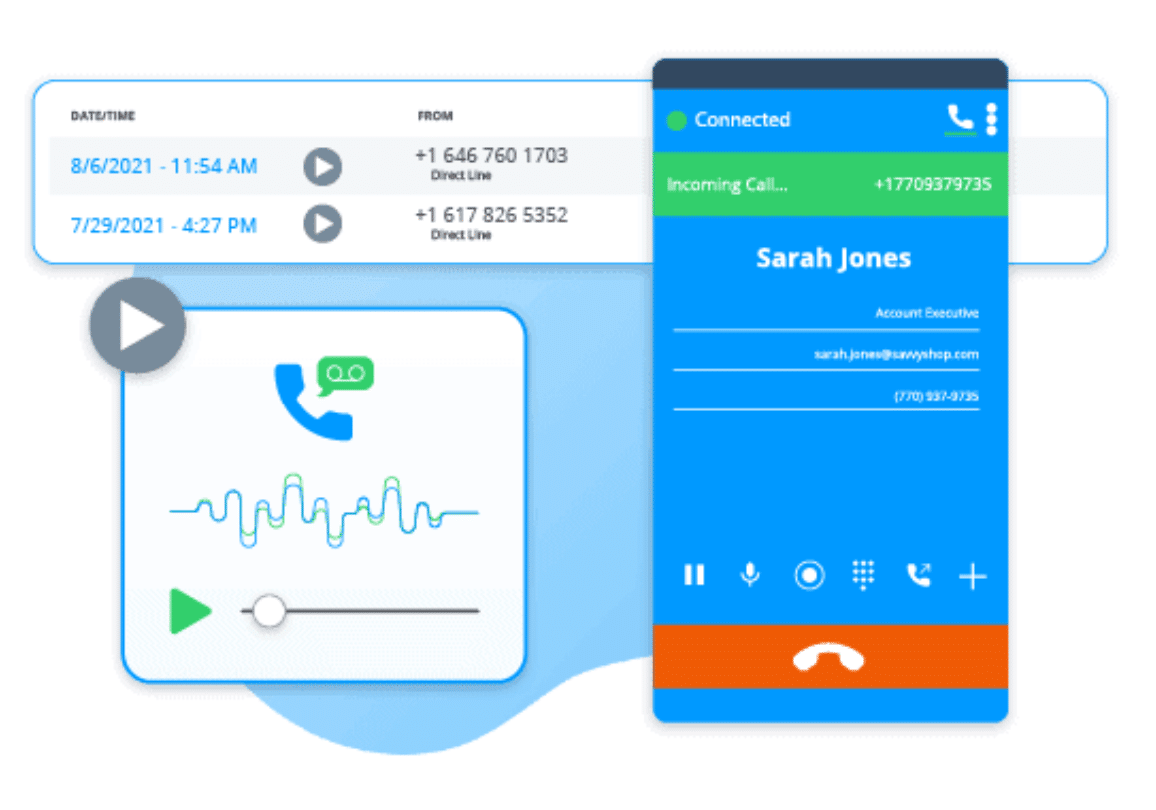
AVOXI provides an enterprise-grade call recording solution built on a secure global voice network spanning 150+ countries. Call recordings reside in a unified platform, which provides routing, number management, analytics, and compliance-aligned controls that meet enterprise expectations. It focuses on delivering high-quality recordings, strong encryption. standards, and centralized storage
Features
- Secure call recording: Capture inbound and outbound calls using SIP, TLS, and SRTP encryption to protect voice data in transit and at rest.
- Centralized cloud storage: Store recordings in a unified cloud environment to simplify access, retention management, and compliance oversight.
- Compliance-aligned recording controls: Apply configurable policies that support regulated use cases, audits, and governance workflows.
- Global voice coverage: Record calls consistently across 150+ countries to support distributed teams and international operations.
- Call quality and performance analytics: Monitor call quality and interaction performance using built-in analytics.
- Enterprise integrations: Connect recordings with CRM, UCaaS, CCaaS, and APIs to embed voice data into existing workflows.
Pros
- Strong compliance with encrypted transport and storage
- Ideal for enterprises with distributed teams or global voice requirements
- Unified environment for routing, recording, analytics, and number management
- Scalable architecture for high-volume, multi-market operations
2. RingCentral
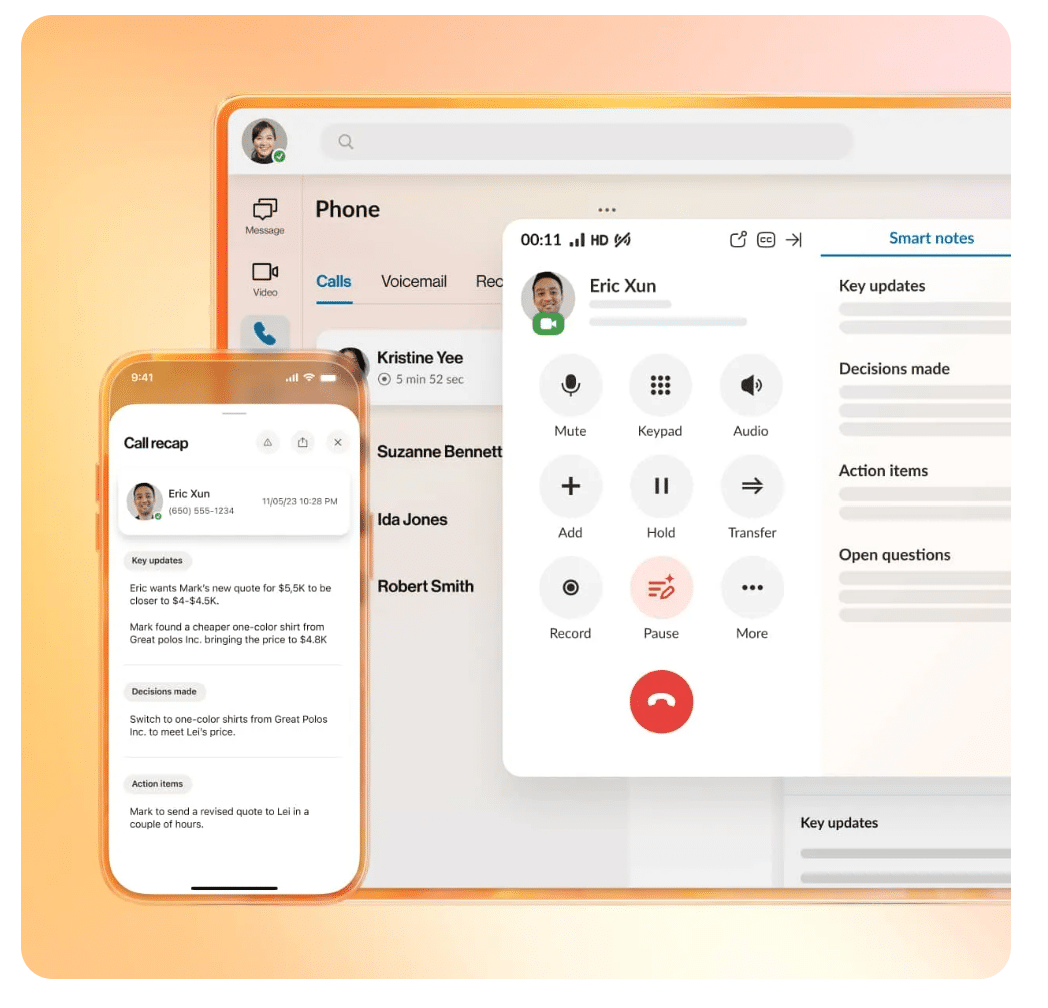
RingCentral offers a robust cloud-based call recording solution that supports both automatic and on-demand recording modes as part of its unified communications. The platform includes enterprise-grade compliance controls, multiple storage and access options, and integrations that centralize all customer interactions.
RingCentral only includes automatic call recording in its higher-tier plans, while the standard package supports manual recording only.
Features
- Automatic and on-demand call recording across voice channels
- Secure cloud storage with admin access for playback and downloads
- Customizable pre-recording announcements for compliance consent
- Cross-device support (desktop, iPhone, and Android devices)
- AI-enhanced tools to transcribe calls and analyze conversations (RingCX)
Pros
- Flexible recording options to match compliance and training use cases
- Integrated analytics and AI features elevate insights from recorded interactions
3. Nextiva
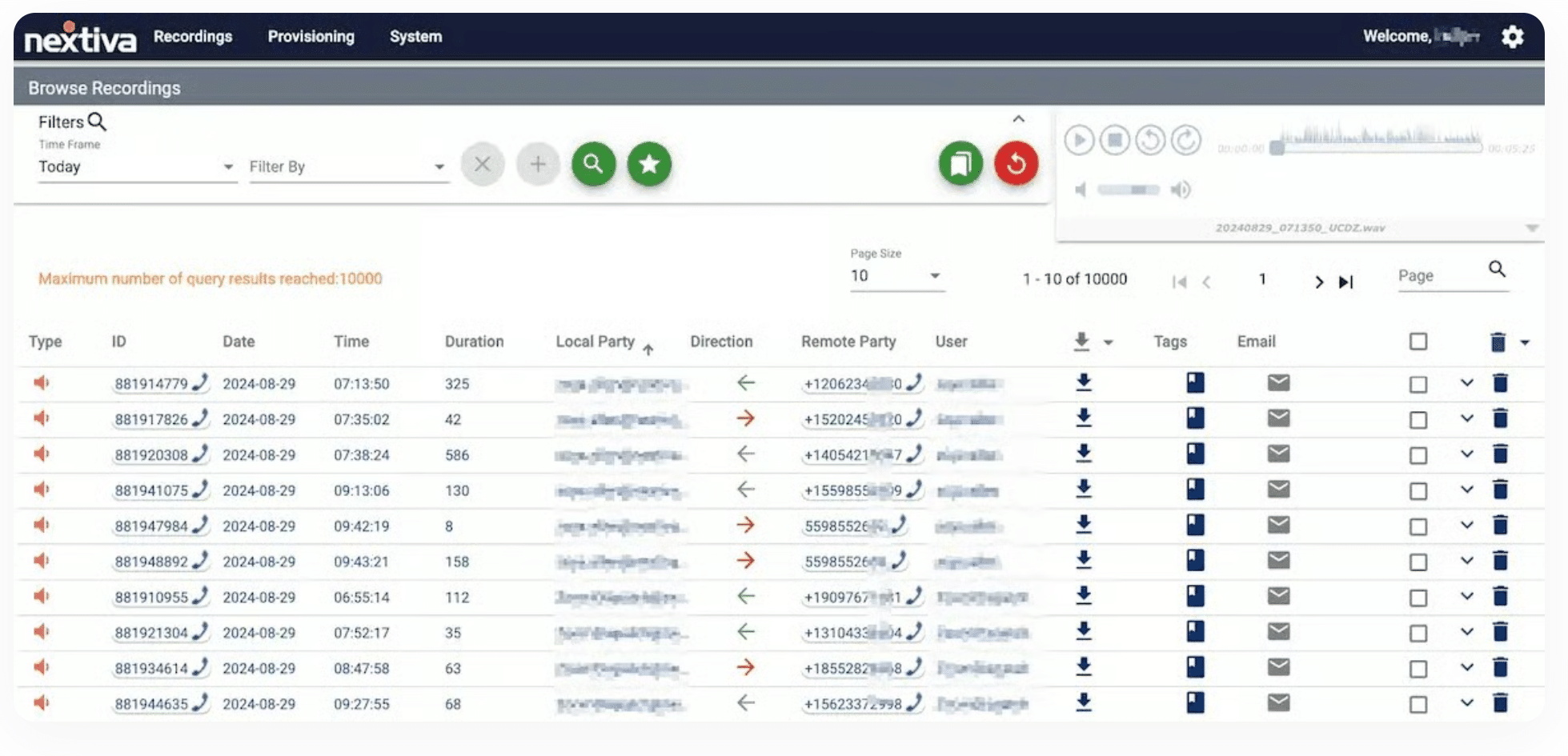
Nextiva’s call recording capabilities are part of its wider Voice over Internet Protocol (VoIP) and customer engagement platform, which organizations use to capture inbound and outbound conversations. For large multi-region enterprises, Nextiva’s platform is more US-centric and may require supplemental solutions for broader global VoIP calls.
Features
- Cloud-based automatic call recording with flexible policies
- Searchable audio archives for QA and audit
- Pause/resume and on-demand recording options
- Secure web dashboard for monitoring and access
- Built-in consent notification controls for call participants
Pros
- Flexible recording policies suitable for training and compliance
- Centralized dashboard for reviewing and managing recordings
- Works across Nextiva’s communication and engagement tools
4. Dialpad
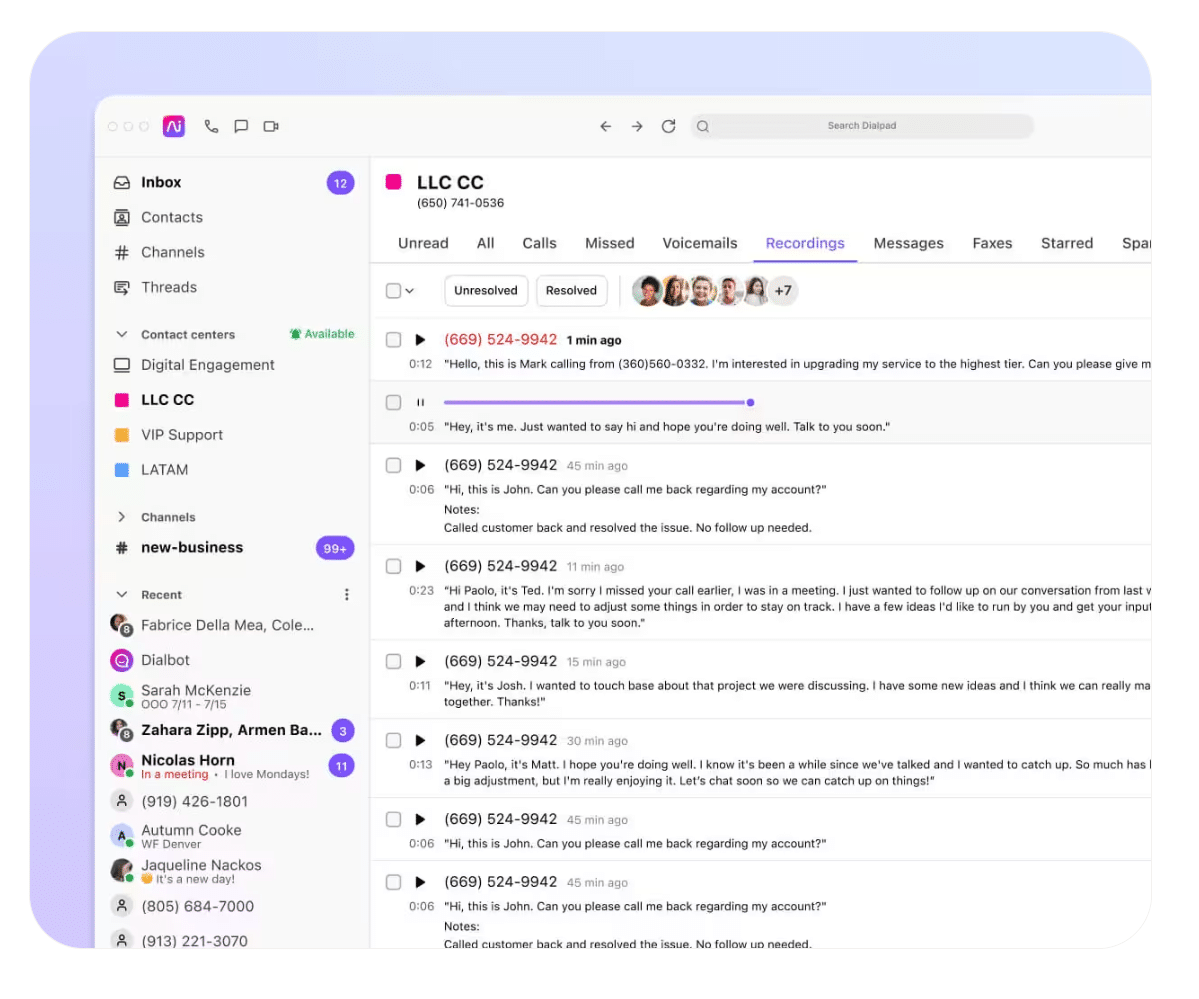
Dialpad delivers a straightforward, built-in call recording tool within its cloud communications platform. Its AI-enhanced features make it appealing for teams seeking rapid transcription and conversational insights.
Because Dialpad prioritizes simplicity and AI tools, some advanced enterprise controls, such as granular routing or complex multi-carrier architectures, may be less configurable compared to more specialized global voice platforms.
Features
- Simple activation controls available in the call interface
- Searchable recording archive within the Dialpad app
- AI-driven transcription and summaries
- Consent prompts for compliance
- Desktop and mobile support
Pros
- AI features streamline coaching and QA workflows
- Recording access is centralized and user-friendly
- Ideal for organizations prioritizing simplicity and speed
5. Aircall
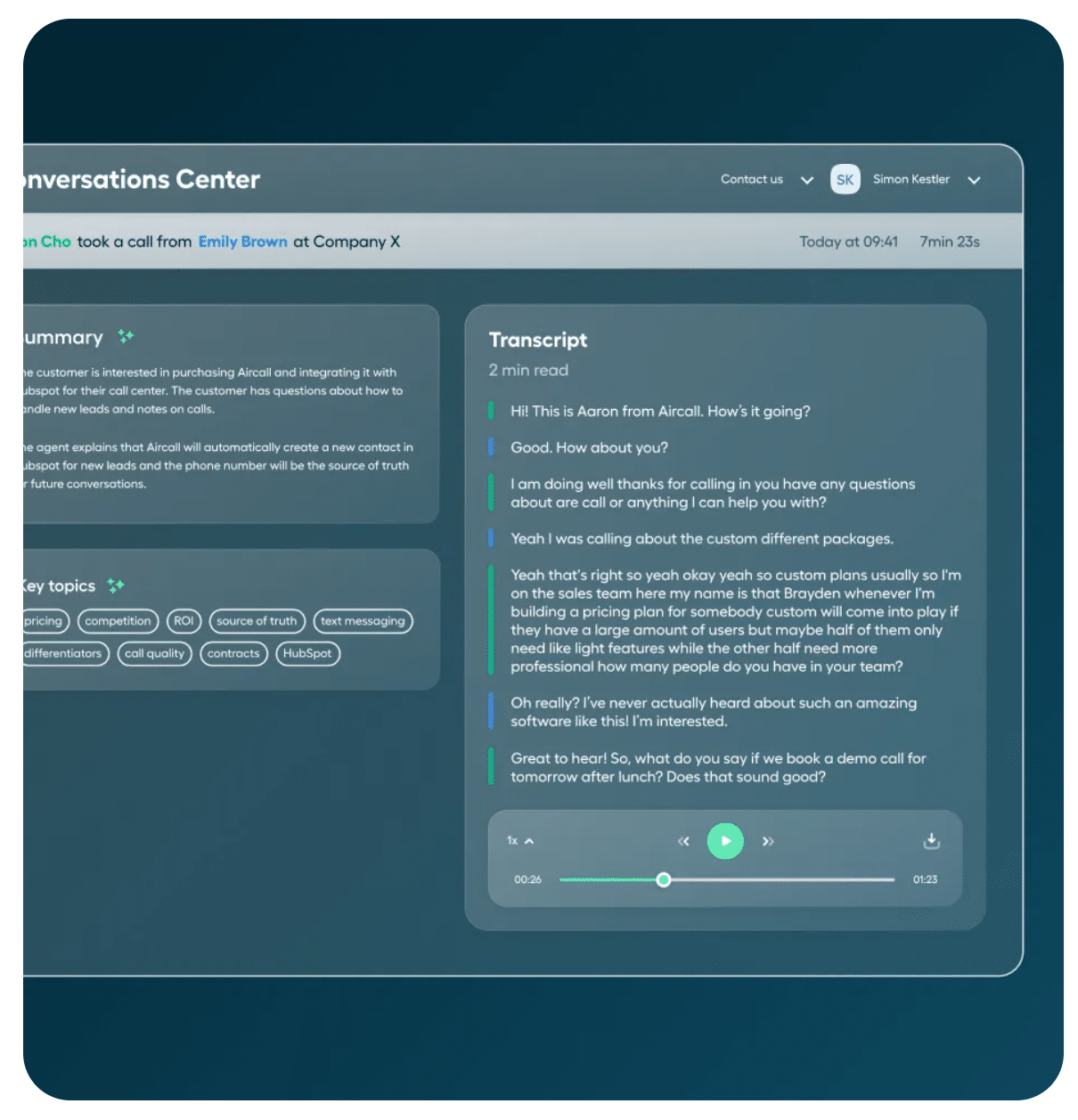
Aircall includes call recording features in its cloud phone system, offering simple recording workflows designed for sales and support teams. The platform focuses on usability, quick onboarding, and clean interfaces.
While intuitive, Aircall’s architecture is more tailored to scaling teams than large multinational enterprises, which may require deeper controls, broader coverage, and advanced routing.
Features
- Easy playback from the Aircall dashboard
- Recording tagging and commenting for coaching
- Team-based access controls and permissions
- Lightweight analytics for conversation insight
- Strong integrations with popular CRM and helpdesk tools
Pros
- User-friendly, designed for quick adoption
- Helpful for coaching and team development
- Clean interface for reviewing recordings
6. CallRail
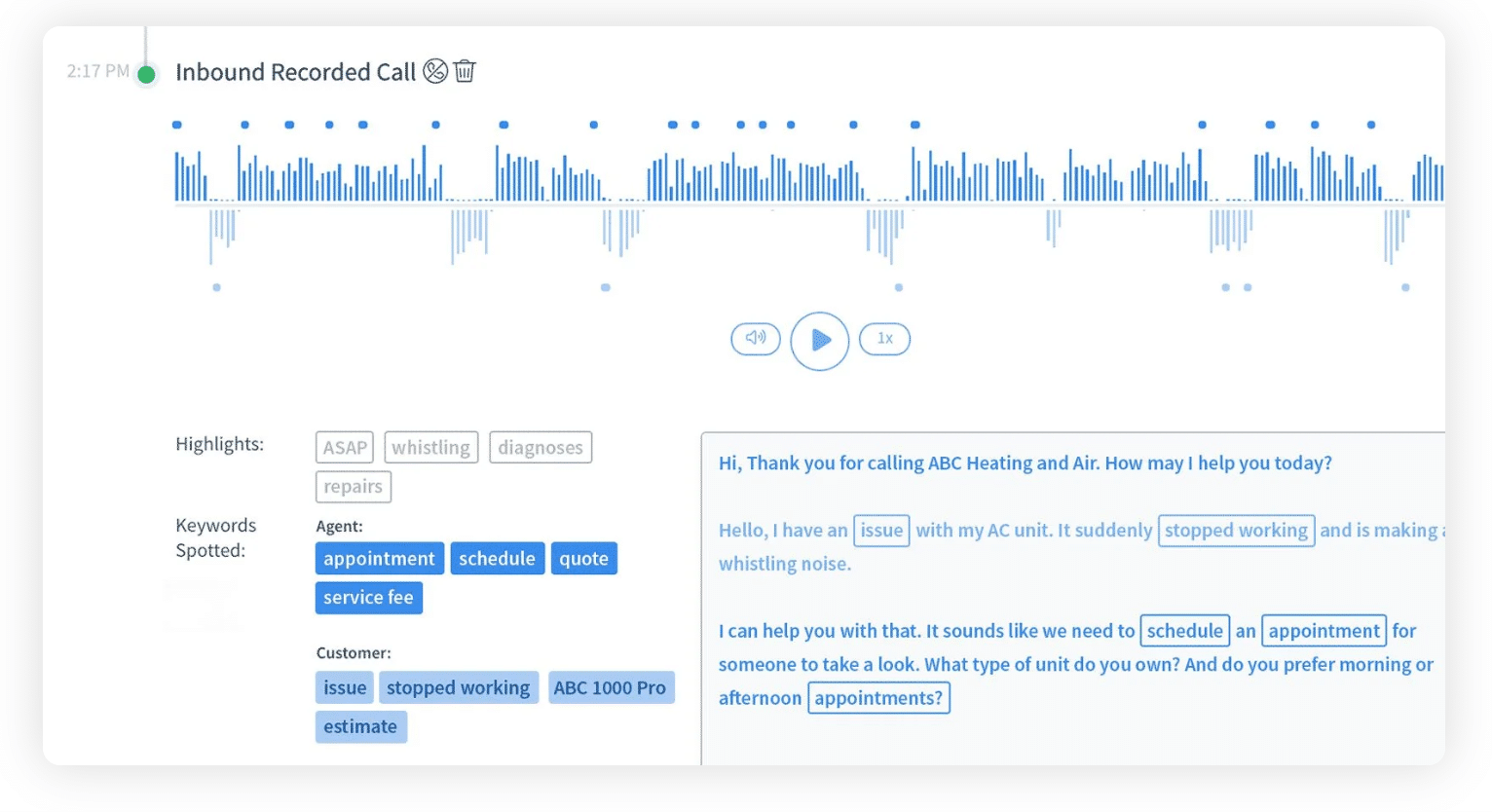
CallRail focuses on call tracking and attribution. The platform includes call recording within its analytics suite to help marketing and sales teams understand lead quality, campaign performance and customer behavior by pairing recordings with detailed attribution data.
Because CallRail is built around marketing intelligence, its call recording features are more specialized for attribution use cases and may feel limiting for enterprises seeking broader telephony or compliance workflows.
Features
- Automatic call recording paired with call tracking data
- Conversation intelligence for keyword and sentiment insights
- Attribution reporting across marketing channels
- Call tagging and scoring for lead analysis
- Searchable recording archive for QA and review
Pros
- Strong marketing analytics combined with call recording
- Valuable for lead qualification, campaign measurement, and sales coaching
- Integrates well with marketing and CRM ecosystems
7. Rev
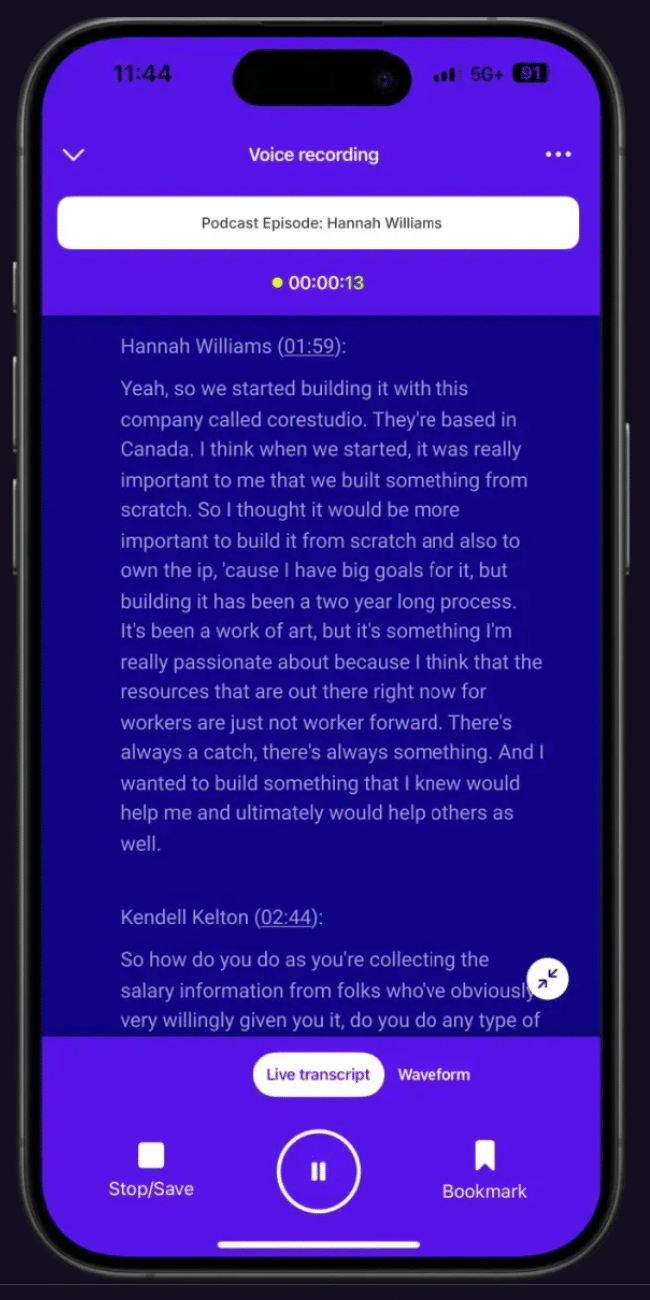
Rev is best known for transcription services, offering both human-generated and AI-based transcriptions of recorded calls. While not a specialized platform to record phone calls, enterprises use Rev for highly accurate transcripts for compliance audits and training or knowledge capture.
Its strength lies in turning recordings into searchable, structured content. Because Rev does not provide native call recording infrastructure, organizations typically pair it with separate recording tools to create a complete workflow.
Features
- AI and human-powered transcription of recorded calls
- Speaker identification and searchable transcripts
- Support for large batches of enterprise recordings
- API access for integrating transcripts into other systems
- Export options for compliance and documentation
Pros
- Extremely high transcription accuracy with human review options
- Ideal for audits, documentation, and knowledge management
8. Ooma
Ooma is a telecommunications company that offers VoIP services for home and business. Its main products include the Ooma Telo for home users (free domestic calling with a device) and Ooma Office for small businesses.
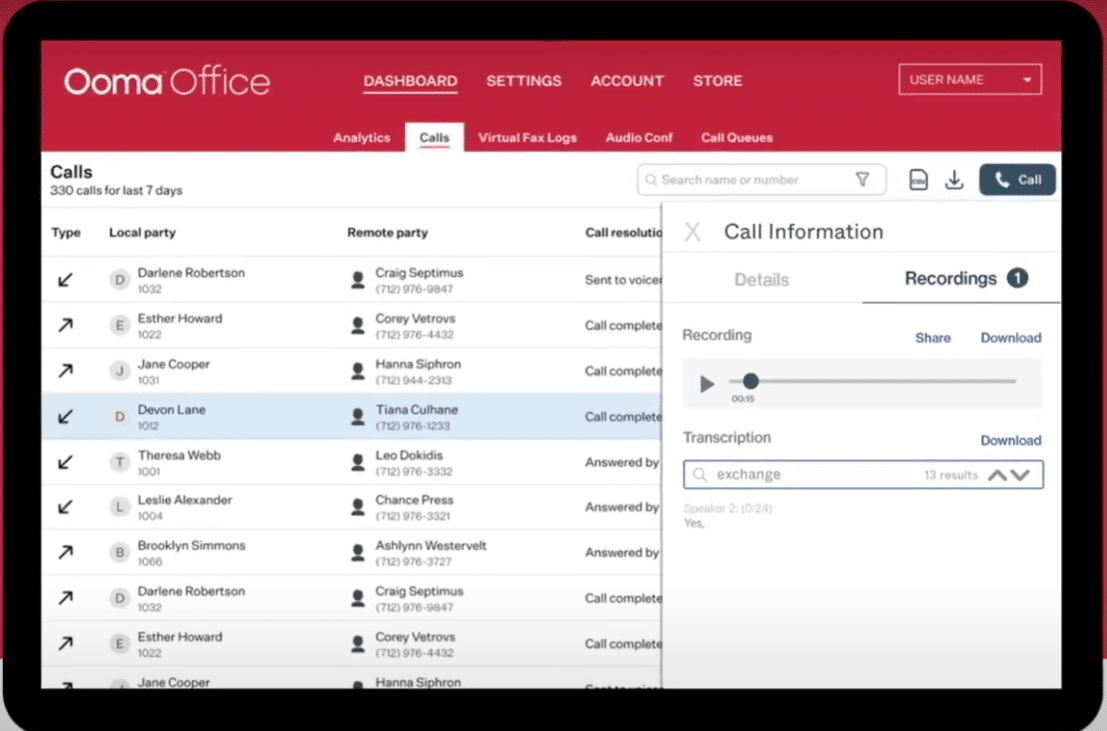
Its accessible recording features make it a practical option for small businesses that want simple call capture without complex infrastructure. Ooma prioritizes affordability and ease of use, which works well for smaller operations but may not offer the depth for global enterprises.
Features
- Review, play, and download recordings from the Ooma Office Manager portal, desktop app, or mobile app
- Store recordings for 90 days in the cloud, with easy downloading for long-term archiving as MP3 files
- Always-On option for automatic recording and On-Demand rules (like start with *52, stop with *53) for specific calls
- Cloud-based storage accessible from the admin dashboard
Pros
- Built-in video meetings (limits apply)
- Calendar and content integration with external apps
- Ooma offers competitive monthly pricing and a no-contract model, which can be cheaper than traditional phone systems for small businesses
9. Five9
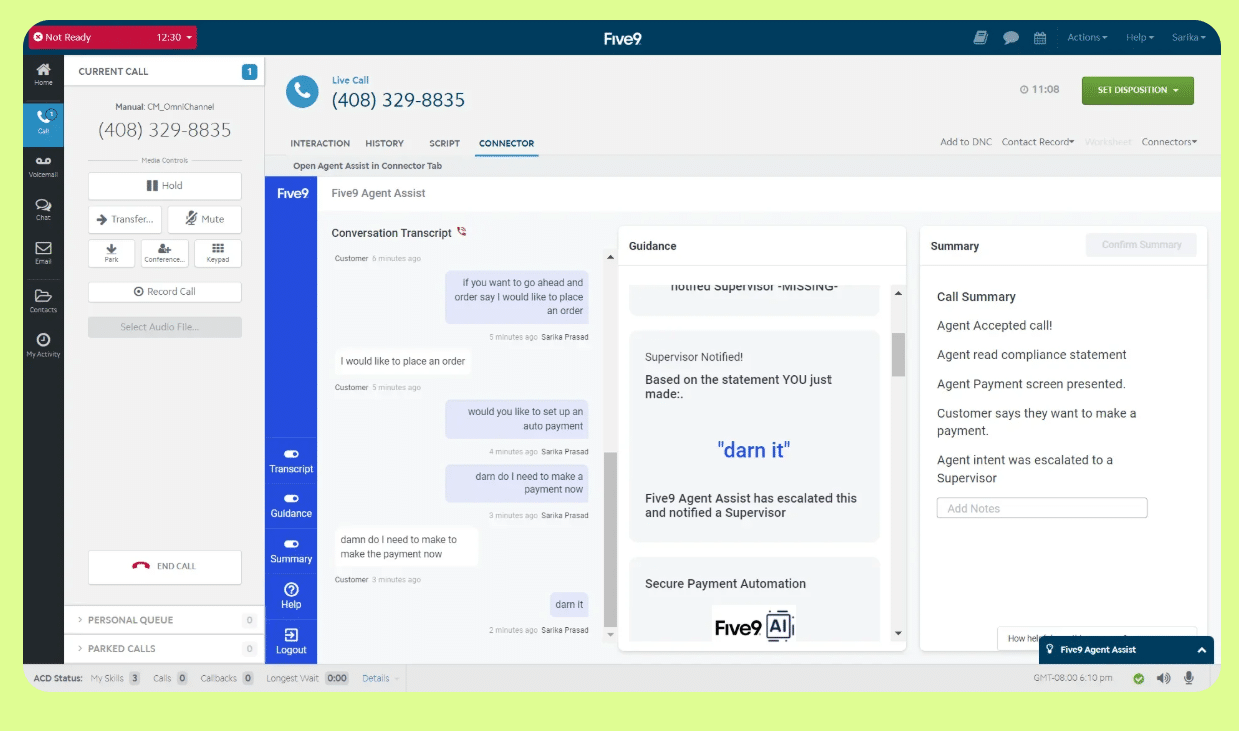
Five9 offers enterprise call recording as part of its cloud contact center platform, focusing on agent performance, compliance, and customer experience analysis. The recordings integrate with Five9’s quality management and AI tools, helping large service teams review interactions and identify improvement opportunities.
While the platform is suitable for contact center environments, its capabilities are closely tied to the Five9 ecosystem, which can limit organizations that use mixed telephony providers or global multi-carrier strategies.
Features
- Handles interactions across voice, email, chat, SMS, and social media from a single platform
- Native integration with Five9 Quality Management for scoring and coaching
- Can sync recordings to SFTP servers for custom integration with other systems
- Real-time conversation analysis to provide agents with on-screen, next-best-action recommendations and guidance during live calls
Pros
- Comprehensive QA and coaching tools built around recordings
- AI-powered transcription and sentiment analysis
10. 8x8
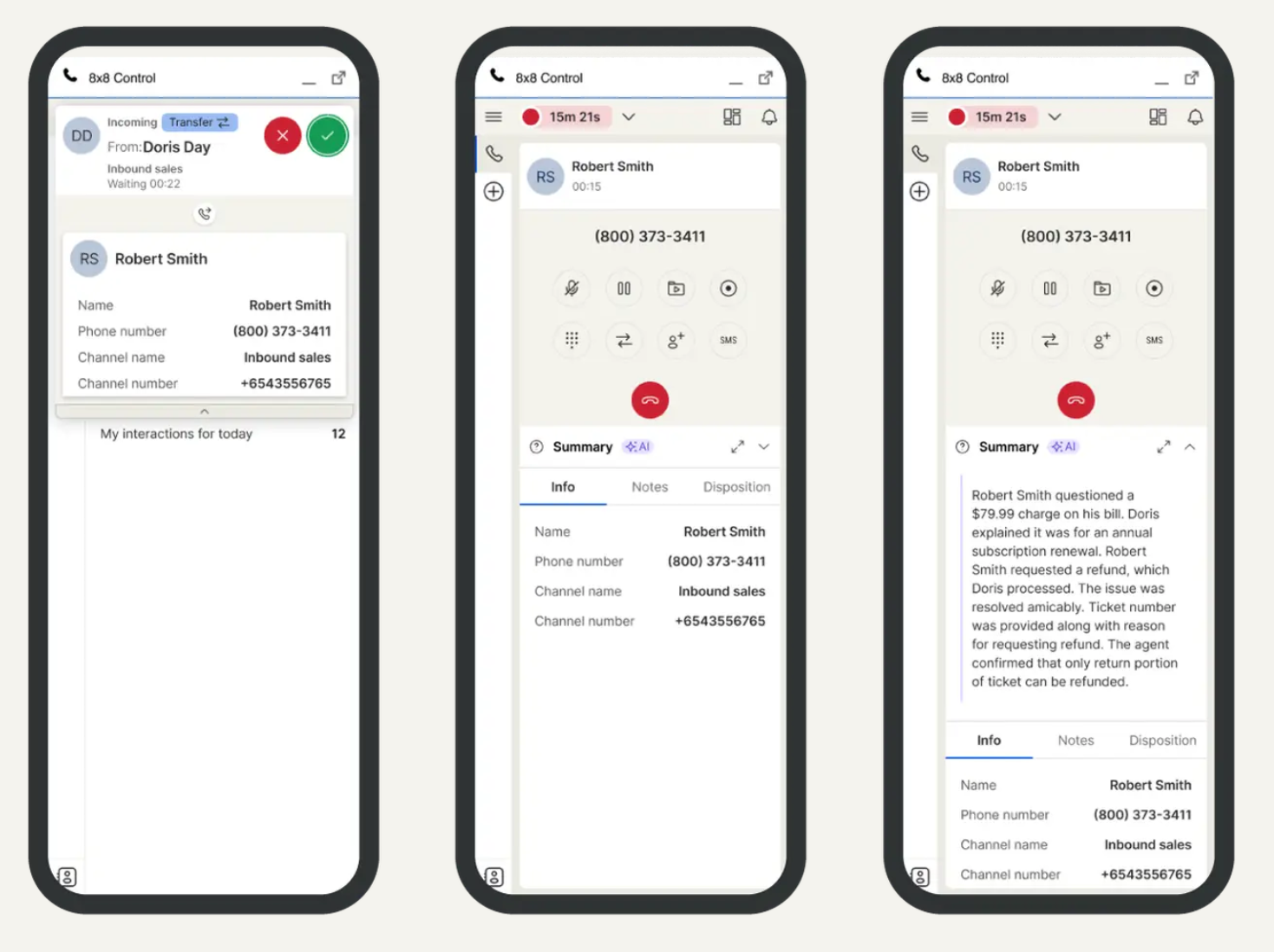
The 8x8 call platform is a cloud-based Unified Communications and Contact Center (CCaaS) solution that integrates voice, video, chat, and messaging. Teams can automatically capture calls, store audio in the cloud, and integrate recordings into contact center workflows. The platform’s analytics and quality management features make it a solid option for teams already invested in 8x8’s broader communications stack.
8x8’s recording functionality is distributed across multiple UCaaS and CCaaS modules, which might complicate things for enterprises trying to centralize recordings or build a unified compliance archive across regions.
Features
- Combines business phone (VoIP), video meetings (8x8 Meet), and team messaging into a single system for seamless internal collaboration
- HD Video Conferencing with screen sharing, audio sharing, and YouTube Live streaming
- Quality management tools for reviewing agent performance
- Private and public streaming of meetings through YouTube
Pros
- Solid all-in-one UCaaS and CCaaS recording capabilities
- Useful for training and customer experience improvements
- The 8x8 support team is appreciated for their quick responses
Key Features to Look for in Enterprise Call Recording Software
Enterprise call recording software supports far more than basic call capture. For large organizations, especially those operating across regions or regulated industries, recording tools must align with compliance requirements, security standards, and operational workflows. The features below outline the core criteria enterprises should use when evaluating call recording platforms.
- Compliance and regulatory controls: Support for regional and industry-specific requirements, including consent management, retention policies, audit logs, and role-based access.
- Encryption and secure transport: End-to-end protection for recorded calls, including secure signaling and media encryption during transmission and at rest. Strong security frameworks reduce risk and support enterprise governance standards.
- Centralized storage and retention management: Cloud-based storage that allows teams to manage recordings from a single interface, apply consistent retention rules, and ensure recordings remain accessible across departments and regions.
- Voice analytics and insights: Tools that extend beyond playback, including call quality metrics, conversation analytics, keyword tracking, or performance insights. These features help teams improve CX, agent effectiveness, and service outcomes.
- Quality monitoring and evaluation: Capabilities that support call scoring, coaching workflows, and performance benchmarking. This is essential for contact centers and sales teams focused on continuous improvement.
- Integrations with enterprise systems: Native integrations or APIs that connect call recordings with CRM, UCaaS, CCaaS, and analytics platforms. Seamless integration ensures recordings enrich existing workflows rather than sit in isolated systems.
- Global voice and recording coverage: Support for recording calls across multiple countries and carriers while maintaining consistent policies. Enterprises with distributed teams require uniform recording and compliance controls regardless of location.
- Administrative control and scalability: Granular admin settings for managing users, permissions, and recording policies at scale. Platforms should support growth without adding operational complexity.
Together, these features form the foundation of enterprise-grade call recording software and provide a practical framework for comparing different platforms.
How to Choose the Right Call Recording Software
Selecting the right call recording software for your enterprise requires balancing cost, capabilities, and long-term operational fit. Consider the criteria below to align your business needs with technology features that support compliance, quality, and growth.
Pricing and Total Cost of Ownership
Evaluate the pricing model relative to your usage patterns and scale. Look beyond headline costs to factors such as storage fees, user tiers, compliance add-ons, and long-term retention expenses. Transparent pricing and flexible contract options help avoid surprise charges as your usage scales.
Integrations with Existing Systems
Ensure the platform connects smoothly with your CRM, UCaaS, CCaaS, analytics tools, and operational workflows. Native integrations reduce friction, accelerate adoption, and ensure call recordings enrich customer records and business insights.
Ease of Use and Administration
Adoption is easier when the interface is intuitive for agents, supervisors, and administrators. Look for centralized dashboards, consistent recording controls, and straightforward policy configuration that minimize training overhead.
Scalability and Global Coverage
Your solution must support growth in users, sales call volumes, and geographic expansion without disruptive reconfiguration. Evaluate cloud-native platforms that scale elastically and ensure consistent features across international markets.
Security and Compliance
Security is non-negotiable for enterprise call recording. Platforms should offer encrypted transport and storage, granular access controls, audit trails, and configurability to support industry and regional compliance requirements.
Cloud vs. Desktop (On-Premises) Options
Cloud solutions offer rapid deployment, global access, and simplified maintenance. On-premises tools may appeal to organizations with strict data residency or internal governance needs. Weigh the trade-offs in flexibility, control, and IT overhead.
Support and Customer Service
Enterprise deployments benefit from proactive support, dedicated account management, and robust documentation. Evaluate response times, escalation paths, and local support availability, especially for your global teams.
How MOS Drives Clarity, Transcription Accuracy, and QA Insights
Mean Opinion Score (MOS) is a foundational indicator of call quality, and it directly influences the value enterprises can extract from call recordings. Higher MOS scores reflect clearer audio with fewer disruptions, which improves overall call clarity and intelligibility.
Clear audio is essential for accurate automated transcription, as background noise, packet loss, or distortion reduces a transcription engine’s ability to reliably capture words, speakers, and intent. When transcription accuracy is high, quality assurance teams can more confidently analyze conversations, score calls, identify patterns, and surface actionable insights for coaching, compliance, and performance improvement.
In practice, a strong MOS creates a cascading effect, enabling clearer recordings, more reliable transcripts, and deeper, more trustworthy QA insights across enterprise voice operations.
Benefits of Call Recording Software for Global Contact Centers
For global contact centers, call recording is not a standalone feature. It is a foundational capability that supports compliance, operational visibility, and consistent customer experience across regions. When implemented at an enterprise level, call recording connects voice interactions to measurable business outcomes that impact efficiency, governance, and performance.
- Improved call quality, agent performance, and coaching: Recorded calls give supervisors direct visibility into real interactions, making it easier to identify coaching opportunities, standardize best practices, and improve agent performance at scale. Consistent access to recordings supports ongoing training and performance optimization across distributed teams.
- Stronger compliance and reduced regulatory risk: Call recording provides an auditable record of customer interactions, helping organizations meet regulatory requirements, enforce internal policies, and respond confidently to audits. Centralized recording and retention controls reduce risk across regions and regulated markets.
- A system of record for dispute resolution: Recorded calls serve as a reliable source of truth for resolving customer disputes, validating transactions, and protecting both the business and the customer. This reduces resolution time and improves internal alignment when issues arise.
- Improved customer experience and service consistency: Reviewing recorded interactions helps contact centers identify gaps in service delivery, refine call-handling processes, and ensure customers receive a consistent experience regardless of location or channel.
- Global scalability with central oversight: Enterprise call recording enables organizations to scale contact center operations globally while maintaining central governance. Unified access to recordings across regions supports consistent quality standards, reporting, and operational control as teams grow.
Together, these benefits position call recording as a business-critical capability for global contact centers, supporting efficiency, performance, and governance across complex voice environments.
Call Recording Laws and Compliance Enterprise Teams Should Know
Call recording compliance is more complex than understanding whether recording is allowed. For enterprise teams operating across regions, compliance depends on consent laws, data protection requirements, storage practices, and how calls are routed through voice infrastructure. This section provides a high-level, enterprise-ready overview to help teams understand the landscape without offering legal advice.
US Overview: One-Party vs. Two-Party Consent Laws
In the United States, call recording laws are governed at the state level and generally fall into two categories.
- One-party consent means only one participant on the call must be aware of and consent to the recording. Most US states follow this model, allowing a call to be recorded as long as at least one party involved knows the recording is taking place.
- Two-party or all-party consent laws require that every participant on the call be informed of and consent to the recording. States commonly referenced in this category include California, Pennsylvania, and Washington, among others.
For enterprise contact centers, compliance becomes more complex because calls are often routed across state lines or handled by agents and customers in different locations. In these scenarios, many organizations take a conservative approach and assume consent is required for all parties. Recorded announcements or IVR prompts that notify callers that calls may be recorded are commonly used to support consent requirements while maintaining consistent call handling practices.
International Call Recording Laws
Outside the US, call recording laws vary significantly by region and country, making global compliance more challenging.
Many European countries require explicit and informed consent before recording calls, often tied to broader data protection frameworks. Some jurisdictions, such as Germany, apply stricter rules not only around consent but also around how recordings are stored, accessed, and retained. In APAC and LATAM regions, requirements differ widely, with some countries requiring dual consent, regulator notification, or specific disclosures depending on the nature of the call and the industry involved.
Compliance complexity increases when calls cross borders, involve roaming users, or are handled by distributed teams. An important consideration for enterprise teams is that compliance is not only about whether a call is recorded but also about how recording data is stored, accessed, transferred, and governed across regions.
Data Protection, Storage Requirements, and Retention Policies
Beyond consent, enterprises must align call recording practices with data protection regulations. Frameworks such as GDPR introduce principles, including purpose limitation, data minimization, and lawful basis for processing. These principles influence when calls can be recorded, how long recordings can be retained, and who can access them.
Data residency requirements may apply in regions such as the EU, the UK, and Brazil, affecting where recordings are stored and how they are transferred across borders. Secure storage, encryption, role-based access controls, and reliable cloud backups are essential to protect sensitive information and limit exposure. In practice, many enterprises maintain different retention schedules by country, department, or use case to align with local regulations and internal governance standards.
Compliance Risks of Multiple Carriers, CCaaS Platforms, or SIP Routes
Enterprises that rely on multiple carriers, CCaaS platforms, or SIP routes often face additional compliance risks. Fragmented voice environments can result in inconsistent recording rules, uneven encryption standards, and varying retention policies across systems. Recordings from different phone numbers, platforms, or regions may be stored in different locations with different access controls, making audits and compliance reviews more difficult.
Unified recording policies help reduce these risks by standardizing how calls are recorded, stored, and managed across the organization. Central oversight simplifies compliance management, reduces operational complexity, and lowers the likelihood of regulatory gaps caused by disconnected voice infrastructure.
Build a Future-Ready Call Recording Strategy for Your Global Contact Center
A future-ready call recording strategy goes beyond capturing calls. For global contact centers, it’s about creating a consistent, compliant, and scalable foundation that supports growth, governance, and customer experience across regions.
Enterprise teams should prioritize strategies that reduce complexity (like consolidating vendors and standardizing recording policies across carriers, platforms, and geographies), centralize access to recordings and insights to improve visibility (so your leaders can monitor call quality, diagnose issues quickly, and understand performance trends across global teams), and choose a platform that supports global reach at scale.
Taking these steps can transform your call recording from a tactical feature into a long-term capability that supports resilient, high-performing contact center operations.
If you’re looking to simplify call recording, strengthen compliance, and gain better visibility across your global voice environments, request a demo with AVOXI to see how these requirements can be addressed at scale.
FAQs About Enterprise Call Recording Software