


Every SIP trunk provider will tell you their network is reliable, their rates are competitive, and their platform integrates with everything. The real question for a telecom or voice lead is how to separate enterprise-grade infrastructure from reseller-grade packaging before a contract locks you in.
This guide breaks down the evaluation criteria that matter most when shortlisting SIP trunk providers:
- What SIP trunking is and why the provider decision carries outsized weight
- Call quality, coverage, security, and compliance benchmarks to measure against
- How to compare pricing models and spot hidden costs
- Technical requirements for PBX, UCaaS, and CCaaS integration
- Red flags that signal a provider cannot scale with you
- How AVOXI approaches SIP trunking for multinational enterprises
Weighing SIP trunk providers but not sure where your current setup falls short?
With AVOXI, you can connect your existing voice platform to a global carrier network spanning 150+ countries and start testing call quality before you commit.
Explore the platform | Get a Demo
What SIP Trunking Is and Why the Provider Decision Matters
SIP trunking replaces physical phone lines with an IP-based connection between your voice platform and the public telephone network. For a solution-aware buyer, the concept is straightforward. The provider decision, however, has consequences that ripple across call quality, regulatory compliance, and total cost of ownership at multinational scale.
A strong SIP integration partner gives you direct access to Tier 1 carrier routes, protocol-level security, and a single pane of glass for provisioning numbers across dozens of countries. A weak one routes calls through resold capacity, obscures its carrier relationships, and leaves you managing regional point solutions. That gap compounds with every country you add.
Key Criteria for Evaluating SIP Trunk Providers
This is the evaluation checklist most buyers are looking for when they compare providers. Each criterion category below maps to a concrete set of questions you can bring into a vendor call.
Call Quality and Network Reliability
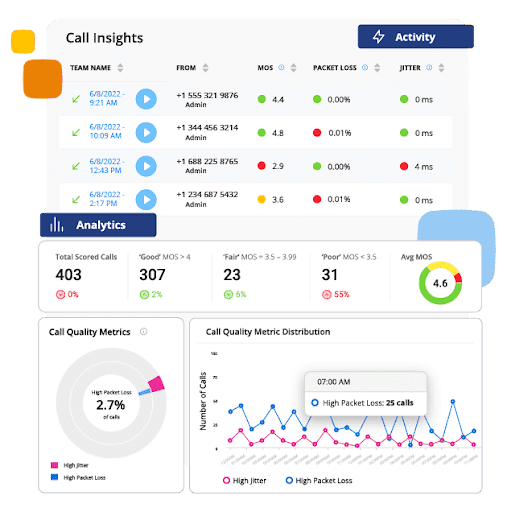
Ask for documented Mean Opinion Score (MOS) averages, not just a claim of "HD voice." Enterprise-grade providers typically maintain a MOS of 4.0 or higher across international routes.
Look for Tier 1 carrier relationships (direct interconnects, not resold minutes), published uptime SLAs of 99.99% or better, and proactive network monitoring that catches degradation before your customers do.
Global Coverage and Carrier Partnerships
Coverage is not just a country count. Confirm how many countries the provider can deliver local DID numbers in, whether they support toll-free and non-geographic number types in your priority markets, and whether they offer multi-region redundancy.
Providers that maintain their own global coverage network across carrier partners give you more routing flexibility than those relying on a single upstream wholesaler.
Security and Compliance
SIP connections are IP-based, which means your voice traffic is only as secure as the transport protocol protecting it.
Ask whether the provider supports TLS for SIP signaling and SRTP for media encryption. SIP security protocols like UDP are fast but unencrypted; TCP adds reliability; TLS adds the encryption layer that enterprise deployments require.
Confirm compliance certifications relevant to your industry and regions, including GDPR, HIPAA, PCI-DSS, and STIR/SHAKEN attestation for outbound caller ID validation.
How to Compare SIP Trunk Pricing Models
Pricing transparency is where many enterprise evaluations stall. Competitors on the SERP tend to skip model-level comparison in favor of generic "contact us for a quote" advice. You deserve more specificity than that.
Per-Channel vs. Pay-as-You-Go
Per-channel pricing locks in a set number of concurrent call paths at a flat monthly rate. It works well for contact centers with predictable inbound volume and steady agent headcount.
Pay-as-you-go charges per minute of actual usage, which suits variable traffic patterns or businesses expanding into new markets where call volume is still ramping.
The crossover point varies by provider, but high-volume international calling almost always favors a bundled or per-channel model. So, compare SIP trunk pricing across at least three providers using the same traffic assumptions: origin country, destination mix, peak concurrent sessions, and average call duration.
Hidden Costs to Watch For
The quoted per-channel or per-minute rate rarely tells the full story. Ask about:
- Setup and onboarding fees: Some providers charge for initial SIP trunk configuration or professional services
- Number porting charges: Transferring existing DIDs should be free or low-cost; high porting fees signal a provider that profits from lock-in
- Regulatory surcharges: E911 fees, STIR/SHAKEN attestation charges, and country-specific compliance add-ons can inflate the monthly bill
- Support tiers: Confirm whether 24/7 technical support is included or gated behind a premium plan
- International rate variability: Per-minute rates to mobile vs. landline termination in the same country can differ significantly
Technical Requirements and Integration Readiness
The interoperability conversation is where enterprise buyers separate themselves from SMB checklists. Your SIP trunk needs to fit into an existing stack, not replace it.
PBX, UCaaS, and CCaaS Compatibility
Confirm that the provider has tested integrations with your specific platform, whether that is a Genesys, Five9, or Talkdesk CCaaS deployment, a Microsoft Teams or Zoom UCaaS environment, or an on-premises PBX running Avaya or Cisco.
Ask for integration documentation, not just a logo on a partner page. Validated interoperability means the provider has confirmed codec negotiation, DTMF handling, and call-flow behavior on your platform.
Failover, Redundancy, and SIP Protocols
Session border controllers (SBCs) should sit at the edge of the provider's network to handle NAT traversal, protocol normalization, and DDoS mitigation.
Ask about failover routing: Does the provider offer automatic reroute to a secondary carrier path if the primary goes down?
Confirm supported codecs (G.711, G.729, Opus) and whether TLS is the default transport or requires manual configuration. For SIP trunk providers serving multinational enterprises, TLS should be the baseline, not an upsell.
Red Flags When Choosing a SIP Trunk Provider
Use this as a quick-scan checklist during vendor evaluations. Any one of these signals warrants a deeper conversation — two or more together should move the provider down your shortlist.
- No Tier 1 carrier transparency: If the provider cannot name its upstream carriers or explain its interconnect architecture, you are likely buying resold capacity with limited quality control.
- No proactive monitoring: Reactive-only support means you discover call quality issues when your customers complain, not when the provider catches them on the network.
- Opaque international rates: Providers that cannot share a rate deck or that bury mobile vs. landline termination differences in fine print make cost forecasting impossible.
- No compliance certifications: An enterprise SIP trunk provider operating in regulated industries should hold GDPR, HIPAA, or PCI-DSS certifications and be able to produce documentation on request.
- Locked-in contracts with no trial: A provider confident in its network quality will offer a proof-of-concept period. Long-term commitments with no trial option suggest the provider is optimizing for retention, not performance.
How AVOXI Handles SIP Trunking for Multinational Enterprises
AVOXI connects your existing voice platform to a network of 80+ Tier 1 carriers across 150+ countries through a single SIP integration. For you, that means one vendor relationship, one invoice, and one platform to manage call routing, number provisioning, and voice quality analytics globally.
Call quality averages a 4.49+ MOS with 99.995% uptime, backed by proactive monitoring that flags route degradation before it affects live calls. The platform integrates with major CCaaS and UCaaS providers, including Genesys, Five9, Microsoft Teams, and Zoom, with validated interoperability documentation for each.
Pricing is transparent, with no setup fees and no long-term contracts required. You can provision numbers in new markets and start testing traffic within minutes.
Already have your evaluation criteria mapped out and ready to talk specifics?
AVOXI's voice specialists can walk through your requirements and recommend a SIP configuration tailored to your traffic patterns and coverage needs.
FAQs About SIP Trunk Buying Guide
How many SIP trunks does a typical enterprise need?
The number depends on peak concurrent call volume, not total users. Each SIP trunk (or channel) supports one simultaneous call. A 200-agent contact center handling inbound and outbound traffic might need 150 to 250 concurrent channels, depending on call duration and overlap patterns.
Can SIP trunks work with an existing on-premises PBX?
Most modern on-premises PBX systems support SIP natively or through an SBC gateway. Confirm codec compatibility (G.711 is the most widely supported) and whether the SIP trunk provider has tested against your specific PBX model before signing.
What is the difference between SIP trunking and hosted VoIP?
SIP trunking connects your own voice infrastructure to the PSTN over IP, giving you control over call routing and platform choice. Hosted VoIP is a fully managed service where the provider owns the platform. SIP trunking suits organizations that already operate a PBX, CCaaS, or UCaaS environment.
How long does SIP trunk setup typically take?
Configuration timelines range from same-day to a few weeks depending on the provider, the complexity of your integration, and whether number porting is involved. Provisioning new numbers on a cloud-based SIP platform is often the fastest path, with porting of existing numbers running on a separate, carrier-dependent timeline.

You Might Also Be Interested in

Need Help Getting US Phone Numbers?
We're here to help! Contact us today so we can help find the right business phone number for you.